How to Turn LinkedIn Posts Into Career Opportunities - w/ Daniel
Most people treat LinkedIn like a résumé site. Daniel Greenberg thinks that is exactly why they stay invisible.


Topic hub
AI roles, machine learning, software careers, robotics, technical product work, and the part of tech where the work still has to survive outside a keynote. This hub is for conversations that are actually about building or moving inside tech, not random life episodes that happened to say the word AI once. 47 conversations so far.
Most people treat LinkedIn like a résumé site. Daniel Greenberg thinks that is exactly why they stay invisible.
You spend a few weekends building a small web app to track garbage piles in your city. You wake up to 250,000 users and your local government quietly using your tool to clean the streets.

Two years ago, Anas lost his full-time UK job. He went back to Upwork — the platform he'd already used to make over $80K while studying — and within months landed an 18-month Swedish contract that generated over $5M in client revenue.
Here's the uncomfortable thing nobody at career services will tell you: "I use Claude every day" stopped being a resume line about six months ago. The people hiring at Amazon, Google, and the frontier AI labs already assume you do.

That's what Avi Pilcer actually shipped while most of us were still picking a domain name. He built an autonomous system called System Zero that does the heavy lifting for him.

Picture this: it's 2023, ChatGPT just dropped, every Fortune 500 suddenly needs an "AI strategy," and the job postings want 5 years of experience in a technology that's barely 18 months old. How does anyone actually get hired in that mess?

Everyone's hyping autonomous AI agents. Your corporate IT department is quietly building a blacklist.

Beyond the Bot: Why Your AI Marketing is Failing (and the Journalist’s Fix) In the noise-saturated landscape of 2026, the barrier to entry for content has never been lower, but the barrier to trust has never been higher. Everyone has access to the same LLMs, the same prompts, and the same "perfect" prose.

Every year, hundreds of thousands of international students and tech workers face the same terrifying math: there are 85,000 H-1B seats and over 400,000 applications. But what if you didn’t have to play the lottery at all?

What happens when a Marvel writer loses $500,000 on his first tech deal? In this episode of Ready Set Do, I sit down with Victor—a legally blind, albino filmmaker and founder who is disrupting the AI space.

The leap from farming in India to building humanoids at 1X is not the kind of story people usually tell without sanding off the hard parts. This conversation keeps the rough edges intact and shows what it looks like when ambition is paired with actual follow-through instead of just a good LinkedIn post.

A lot of people frame success as leaving, which is convenient because it keeps the story simple. This episode is more interesting because he chose IIT Kharagpur instead, and the whole thing becomes a very different kind of bet on AI, ambition, and where the best launchpad actually is.

In this episode of Ready Set Do , my guest is Umang Chaudhary , a Machine Learning Engineer at TikTok and former Applied Scientist at Amazon . Umang’s story is one of momentum — a reminder that you don’t need decades of experience to reach the top tiers of tech.

"You need experience to get the job, but you need the job to get experience." It is the classic Product Management "Death Loop." If you are a doctor, a teacher, a marketer, or a salesperson, you are constantly told that you don't have the "technical DNA" to be a Product Manager. You are told to go get an MBA, learn to code, or start at the bottom of a support desk.

This episode is a goldmine for builders: my guest is VJ Swaminathan, a serial entrepreneur you probably already know from Pathfinders and Authentic Hustle. VJ does something rare on this show — he literally pops the hood on his AI recruiting product, , and walks us through the exact tool stack, architecture decisions, and development trade-offs that got him from idea to demo.

Amazon interviews have a way of making smart people overthink the obvious and underprepare the parts that actually matter. This one gets into the loop, the hiring bar, and the kind of interview prep that is useful when the room is moving fast and nobody is handing out extra credit.

Agentic AI isn’t just hype—it’s the future of how intelligent systems will work. In this episode, we dive deep with Meri, an engineer and educator at the forefront of this next-gen paradigm.

In this insightful episode, we dive deep into the world of Mechatronics Engineering with Shivam, a passionate engineer who stumbled into this interdisciplinary field by accident—but never looked back. Whether you're a student exploring engineering specializations or a tech enthusiast curious about how mechanical systems, electronics, and software come together, this conversation is a must-watch.

Machine learning interviews have become a strange mix of theory, product sense, and please-do-not-waste-my-time energy. Nirmal and Karun pull the curtain back on what candidates keep getting wrong, what hiring teams actually notice, and how to stop rehearsing answers that sound smart but do not land.

In this episode featured not-Guru is Jackie Henning. Jackie is a Product Manager at Cylinder and thru her content, has helped hundreds of aspiring PMs break into Product Management.

In this episode my guest is Subhabrata Debnath. Subho is a co-founder and CTO at Neuralgarage, whose proprietary solution VisualDub provides state-of-the-art LipSync using AI while maintaining exceptionally high visual fidelity.

Most robot vacuums still feel like they were built by people who have never watched one get stuck under a chair leg. Anshuman talks through what Matic had to rethink, why the obvious fixes were not enough, and what it takes to make hardware that works in the mess people actually live in.

Varun shares exclusive interview-coaching insights from his 21-Day Interview Mastery cohorts. We cover practical frameworks for every interview-question type and the psychology of endearing yourself to any interviewer, no matter the industry, role, or career stage.

This is a special crossover between the podcast and my YouTube series Build Your Own App , where we spotlight cutting-edge AI tools for everyday creators. Farah and I walk through multiple ways to build a fully customizable personal portfolio site that helps you stand out to recruiters.

Shifra is a Developer Relations Advocate at and this is part 1 of my 2-part conversation with her. the topic of our discussion is how to switch to a career in tech - esp if you come from a non technical background - like Shifra, who had a background in music before becoming a data scientist and finally pivoting to the DevRel role.

Data engineering is the role people find after they get tired of vague 'learn data' advice. Sam makes the path concrete: what the job really asks for, which tools matter, and how to get hired without pretending you woke up fluent in all of it.

A clean career pivot sounds nice until you are the one in the middle of it. Bhoomika walks through moving from economics academia into data science, what her background gave her, and how to make a non-linear path feel honest instead of apologetic.

AI product management sounds clean from far away. Up close, it is a mess of shifting expectations, vague job titles, and people pretending the role is already settled.

Data science interviews have become their own weird theater: LeetCode, dashboards, vague case studies, and a whole lot of pretending. Karun keeps it grounded here and walks through what actually matters if you want the job, not just the buzzwords.

How To Start An AI-based Company & Community opensphere.ai. This episode follows the first moves, tradeoffs, and lessons that show up before a story looks clean from the outside.

Can you build a startup while you are still on an F-1 visa? Supreeth Reddy, co-founder of Serene AI, talks through the sleep-tech problem he chose, how he found mentors, what it took to raise support, and the legal and practical mess of building as an international student.

"Born to make art, forced to produce content." It’s the meme that haunts every creative in 2025. We all marvel at the beauty of a masterpiece, but when it comes to the business of art, most of us are clueless.

Aashka is the founder of various initiatives all focused on AI regulation, including her podcast @onairwithaashka , while also being a freelance bug bounty hunter for topic for today’s discussion is AI Safety and Regulation - what exactly it means, why its important and what the average person of the world can do to play their part. We also go over some of the most critical risks that are already becoming prevalent, including the tragic incident of a florida teenager who tragically ended his life in connection with a bot and steps that can be taken to prevent such instances to the degree possible.

Product, project, and program manager roles get mashed together until the whole thing starts sounding like one vague career blob. This episode breaks that apart in plain English and gets into what matters if you want to get hired without pretending the title alone is the answer.

Vishwas is the head of Revenue Strategy at subject of today’s discussion is AdTech. Vishwas takes us thru the fascinating and cash-strapped world of ad tech and the engineering marvels it takes to serve personalized ads to users within 200 ms.

Most AI conversations skip the part where someone has to build the thing inside an actual product with real users and real constraints. Nikhil talks through what it looks like to design generative AI features for Adobe Acrobat and how that kind of work maps to machine learning engineering roles.

Tom is a co-founder at Omnia, which is a one stop-shop for deploying XR content at scale. Another way to think of Omnia is simply the YouTube for XR creators and walks us thru the specific problem Omnia solves, and showcases some stunning use-cases of Omnia that is currently used by realtors in Chicago.

Everyone wants the clean answer for how to get into Meta, but the real path is usually a lot less tidy than the LinkedIn version. This one gets into the stuff that actually moves the needle: the technical bar, the moves that help you switch to better opportunities, and the kind of prep that does not collapse the second an interviewer asks a real question.

Grad school advice gets weird fast because everyone starts talking like they were born with a polished profile. Unnati breaks down the real work behind an Ivy League MEM admit: the GRE, the SOP, the letters, and the part where you stop trying to sound impressive and start sounding clear.

Sai is the Lead Data Analyst at Blue Cross Blue Shield of South Carolina. Coming from an electrical engineering background, Sai managed to not only get into a top Data Analytics program at University of Connecticut, but also break into his current position without having any prior work experience whatsoever.I believe anybody who is currently in the job market can immediately appreciate what a gargantuan task that is - and Sai breaks down for us his exact strategy using which he was able to succeed.

First internships are often less about being brilliant and more about not getting spooked by the process. This episode is for the person who keeps thinking the US product manager path is only for some polished, obvious candidate from the start.

Aditi is an ex-tenured professor, published author, and founder of Dr. Paul & Co., where she helps Indian immigrants take charge of their immigration journey - by means of securing the EB1 visa, which she holds; and other talent discuss:- Aditi’s journey moving from STEM field to non-STEM field for higher education- Getting her Doctor of Philosophy degree in Communication- Breaking Bad- How her research paper on dating, after being fired from her department during her PhD, led to being featured on major news channels- The psychology of immigration- How Indian immigrants can assimilate to the culture in the US- Importance of self-awareness for immigrants and realizing how the US is a PR machine- How anyone can build their profile to get an EB1 visa and WHY?

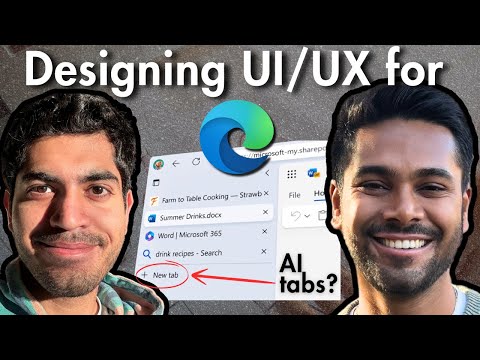
UI and UX advice gets mushy fast because people love talking about taste more than work. Tushar gets specific about the HCI route, what product design at Microsoft actually asks of you, and why good interface work is usually less about pretty screens and more about thinking clearly when the constraints get annoying.
Construction is full of people who act like there is only one way to get in. Farheen did not follow that script; she moved from architecture into construction management and talks honestly about what changed, what stayed hard, and how she kept the move from turning into a performance.

A resume usually does not get rejected because you are terrible. It gets rejected because it is speaking the wrong language, and nobody bothered to tell you that until after the damage was done.

Utpal is a co-founder at Digger, but perhaps more notably, a life-long cricket fanatic. He has played semi-professionally in India and continues to play club cricket in the UK as of May 2024, and has also co-founded The Cricket Revolution, which is a product for cricketers to leverage to get better at the sport.
Getting hired at Amazon is one thing. Getting hired into a role that actually fits you is the harder part.
