
Episode 129
How To Quit UPSC After 2 Failed Attempts & Restart With An MS In The USA - w/ Akash
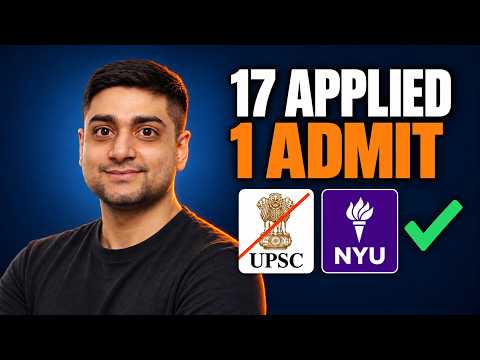
Akash prepared full time for India's UPSC civil services exam for two years. Eight to nine hours a day, two attempts.
Who this is for
- You are making a career move across countries and the paperwork is part of the stress.
- You would rather hear Akash's version while the mess is still fresh than get another polished hindsight sermon.
Key takeaways
- Quit UPSC After 2 Failed Attempts & Restart With An MS In The USA - w/ Akash
Fast scan timestamps
Full transcript
The complete conversation with timestamps. Timestamps link to the moment in the recording.
most of the student is like a black hole that really sinks all the youthful years of India. Two years, eight hours daily, two attempts at India's hardest exams. Then he walked away from all of it. I didn't really properly sleep for those three days. I actually felt sick in those three days. He restarted at 24. Masters in computer science, no coding background, nothing on paper to prove that he had the credentials. But bro, you have no credential at all. You won't be able to convince your uncle, let alone the admission committee that you deserve to study in computer science. And so he reverse engineered the credentials from scratch and then converted it to a pure numbers game. Applying to 17 universities. And guess what? I just had one admin. Then New York, six figures of debt, no return offer, then a layoff. I would be Googling,
okay, hey, what about failure course on an F1 visa? This one is about quitting something you already paid for and what it actually costs to start over. Please join me in welcoming Akash Pandey to the Ready Set Do podcast. Let's jump in. Akash, welcome to the show. Thank you. Appreciate you making time. Yeah, really excited to get this going. Sorry about all the random rescheduling we had to do but just cannot wait to kind of sink my teeth into learning about just like it's almost kind of it reminds me of 12th pass a little bit or 12th fail. I forget what the name of the movie is.
I think 12th fail. Yeah. Okay, yeah, there you go. 12th fail. You know, great to get that butchered right in the first minute. So with that out of the way. Yeah, so it almost reminded me of like that when I came across your LinkedIn profile and I'm just so curious to unearth what goes on there. Obviously, there's a few elements. The first being that I just think personally and I've talked to a few people that you know tend to agree. But just the UPSC in general is I feel like the biggest time sink in like all of everything that's current about you know, the way things are done in India, like 10s of 1000s and millions of students every year, basically waste away the most productive chunks of their lives trying to get something that you know, we don't even know or I don't know if
it's up to us to comment whether it's good for them or not. All of random word soup to say, can you talk us through your journey and take us to that point where you first decided to prepare for the UPSC you were like here's what I'm going to do and then kind of share what happened from that point? Yeah, that's that's a good question. And honestly, I wish I had a very, you know, perfect answer for that. But I do not think my why was as strong. So it all it all happened back in my undergrad. I was a metallurgy grad student, or I was doing my undergrad, I was studying metallurgy as my major. And I did not have any interest in that course, no offense. That's a lovely course for those who love it. It was on me that I wasn't a good metallurgy student. Having said that,
we had this mandatory attendance rule back at IIT BHU. And I obviously had to go to classes. And because I wouldn't understand what's going on, I would like just go to the backbench and just read books. And I would read like novels, all kinds of books. And funny enough, my roommate at the time, he was preparing for UPSC. And so he had like a bunch of books in my room, we shared the same room. And so when I ran out of my novels, I was like, Okay, this these books aren't too bad.
And I just picked up India's struggle for independence. It's a it's a history book. And I it's like a 700 page, like very thick book. And I just picked it up because I didn't have any other book to read at the last bench of my metallurgy class, where I was there just for attendance. And so I don't encourage that. Having said that, I started reading it. And in a matter of next, I would say almost two years, I ended up reading all his books, like it started with history and then, you know, geography, economy, Indian economy, current affairs, and I was just like hooked. And at that point, you know, I had no plans to attempt UPSC whatsoever. And after that, when I started my first job, I wasn't really I went into consulting, and I wasn't really enjoying it.
And so I did that job for around a year. And I realized that, hey, that's not my calling. Again, this is not what I want to do. And now I was like, what do I do next? And so that is when I reminded myself that, hey, I have read all these books already for UPSC. Why not give it a shot? And also at the time, I was a caregiver to my mom, she was going through some serious health conditions. And so I was at home as a caregiver. And so I was like, okay, I have some time on my hands. Why not I revise what I've already read? It's not like I'm starting from scratch. Yeah, and just give it a go. So honestly, that was how I started or I kind of got into that.
I wouldn't call it trap. It's not a great word. But at least for me, it's Yeah, that's something that kind of got me into preparing for for UPSC. And then yeah, the rest of the story is obviously out there on LinkedIn, but we can also talk more. But yeah, go on. Yeah, I'm very curious. So for those in the audience that are not super aware, that includes me exactly if you had to kind of give an overview level description around what's asked in at least like the first written test, I know there's a few phases or whatnot. So just kind of paint that picture for us, if you would please in terms of so I know you mentioned the current affairs economics, some other stuff like geography, I think you said, but yeah, exactly what's the scope? Because all of those things
sound really broad. So is it designed to be that way? Yeah, they say that everything under the sun is in the UPSC syllabus. And rightly so. I mean, it comprises of yeah, like different subjects, you know, right from there's general studies. And then there's optional. And in the general studies, it's like a bunch of subjects right from geography, history, quality, economy, current affairs, environmental sciences. And it has like three stages, first is the preliminary round, second is the mains, and third is the interview. And yeah, obviously, it's a very competitive exam. People from all majors are all streams, art, science, and what is it? commerce. Yeah, they all sit for for the them. And so almost like, I think more than a million people at
least fill out the form, if not attempt. And so yeah, that's the nature of the exam. I think it's very, also, it's very subjective in nature. And so it's not like, it's not like an equation, you know, lhs equal to rhs, like the way we study for, let's say, the engineering entrance exams where, you know, once you understand the fundamental concepts, there's probably no question that you're not going to crack if you really understand things thoroughly. But that's not the case for UPSC, because it's very subjective. And the interpretations can be different. The syllabus is so huge, you know, you might miss a few things here and there. Yeah, it's also a matter of luck. I mean, you studied something and you know, it appeared in the exam, or you ended up wasting like two
months and that wasn't asked at all. So, I mean, yeah, for me as a person who was always into, you know, preparing things very fundamentally in a very structured approach. Clearly, it didn't work out. But then yeah, I gave it two attempts. And then I was like, I don't want to gamble my entire youth on on on an exam. Yeah. And so I want to jump in there. When you say you give two attempts, so you mentioned you had quit your job at the time. So were you literally just studying? Like, were you a professional studier for two years? Yeah, yeah, yeah. Wow. More than two. I was like, yeah. Wow. Yeah, doing everything I could sitting for like long hours again, like starting for like eight to nine hours per day. It was like a full time job to study. I'm so curious. Take us through
a day in the life of any one of those two years. I'm just so curious how you were, you know, routining this like I'm just, you know, very intrigued by us. Yeah. Yeah. So fun fact, during those four years at IIT, I was like a loafer. I was like a baster. I wouldn't study. I wouldn't recommend that lifestyle. But I was like, you know, I had really grinded really hard for two years in my 11th and 12th grade. And then when I finally made it to IIT, I was like, that's it. I needed some break. And that's that's how the world sells you the dream, right? They're like, okay, you know, crack this exam and you know, then you're good to go. I was like, I am good to go now. Yeah. So I took it very literally. And I stole like a bunch of things. And studying was
like the last one of them. Of course, I would do the bare minimum and make sure that I get the threshold GPA because otherwise the placements wouldn't let me sit for the jobs. So I did all of that. And so in those four years, I really lost that habit of, you know, sitting in one place and studying for long hours without being distracted. So I kind of like my brain got rusty over the period of four years. And it's a very common phenomena, I would say with many IIT grads.
You know, they kind of tend to lose their strengths around like focused, concentrated, long hours of study. So that was the case for me. And so then like, I had to kind of like condition myself into, you know, making myself sit on a chair for like long hours. And so for the first one month or so, I was like kind of like just conditioning myself, making a daily habit. And a typical day would be I would obviously get up in the morning, around 8, 730 or 8. I've always usually been an early riser, sometimes even earlier. And then obviously, I would get my breakfast and everything done. And after that, I would, yeah, take a water bottle next to me and just like, yeah, sit for like two hours, I would make sure that I do, I study in like a shift of
two hours, like I would study for two hours, then take a break, then again, and then obviously take a longer break when I had to go for lunch. But I would always be like, if I'm sitting on the chair to study, I have to sit for two hours. That was non-negotiable. And yeah, so I would like take one of the subjects, let's say I would, the way it would work for me was, I cannot be like context switching. So I would just most likely spend my entire day into one or at most two subjects that I had to study, I wouldn't like study all of them in parallel. And so let's say if I, if one day I was studying anthropology, and let's say history, I would divide it into divide my day into two halves, let's say I was studying for eight hours, I was like four hours I'll study anthropology, the other four hours study history.
And yeah, just just go, go at it. There was no AI at the time, obviously, so you had to go for a bunch of books, curate your own notes, and it was all like manual handwritten. I would barely use laptop at the time, it was all like handwritten notes, bookmarks, like physical highlighters on the on the books. So yeah, very traditional old school way of studying things, trying to retain, trying to memorize, trying to kind of go deeper sometimes, but also not too deep to waste your time. It's like a good balance, you know, you can't be going too deep as you're not doing a PhD in that course, like you're just doing enough. So I was pretty much pretty much pretty much that. Here's a question, if I can jump in that has always just, you know, I've just always had this question, and I've never once
been able to ask somebody that has, you know, been there done that. And so actually, I'm yeah, to take a step back. First of all, you, you and I both know, I'm trying to figure out how to best word this, but I guess most members of our audience are watching would know that there's almost, you know, this just obsession with getting into UPS. There is literally nothing that is more that is held to a higher standard than that exact thing. I guess what I'm getting at is if you were to remove yourself from that position, right? Like, let's just look at a person x that's preparing for UPS, we know, like you just told me there were what, like a million people that average apply, right?
So what I'm getting at is, is all of this studying that you were doing, does it actually translate in any way, you know, to something that can, you know, build a career, make money for somebody, make them well suited for a certain type of job. Because what I've been led to believe is that it's just like a time sink, like there's very little you can get out of it outside of obviously cracking the UPS, which is the main point. But does that make sense? Like, is that tracking with you what I'm trying to get at? Absolutely. Yeah. I think what you're trying to say is, I think UPS is pretty binary. So it's either one or zero. Like there's no proportional outcome to your effort. For example, in computer science, if I put in, let's say 99% of the work, I will get maybe let's say I don't crack
Google or an anthropic or whatever, but at least I get like a good job. Yeah, you know, I get like a good decent paying job because yeah, hey, I did study, I do know my concepts. And so it's like, the output is proportional. Yes, I may not be in the very top of the top, but at least I'm there, and I'm making a living and it's working out for me. But that's not the case in UPSC. So it's pretty binary. Either you really have a very high upside and you like end up cracking the exam, you get to be a very top administrative officer. But if you don't, then I think the downsides are also pretty high. So that's like the gamble of UPSC, I believe. And it's definitely I like to call it for most of the students, it's like a black hole that really sinks all the youthful years of India. And it's
such a national hobby at this point, especially I don't know where are you originally from, but if anyone from UP, but roots in Bihar. Okay, got it. So yeah, you also know it. I mean, if you grew up in a family that originally comes from UP or Bihar, you're pretty much, even if you're slightly smart, you're like told or brainwashed into believing that hey, you can also, you should attempt it and you will crack it. Which is, which is again, to our parents from the generation that they come from. Maybe that was one of the most uplifting things to do.
But I believe there are more ways to reach the same goal now. So yes, to your question precisely, I personally think because you're just studying like history, geography, and, you know, all these other liberal arts subjects, job value wise or skill wise, I think no offense to those subjects, but given the market, given those skills that pay more, pay less, I believe if you, let's say, invested four to five years of your life, and let's say if you don't make it, which is the case for 99.9% of the people looking at the stats, then you're basically back to square one. And while it may not tangibly give you any skills, I believe one thing that it does give you is that ability to grind hard. So that's what I tell people to kind of bank on like, yes, you may have lost some
years, you may have lost some efforts there. But it's definitely a gain in terms of like the character that you build. So yeah, I wouldn't call it an absolute waste of time for someone who has already been through that. I'm sure they have built some character out of it. And hopefully, if they apply it in the right way, I believe it's never too late to take a U-turn. Yeah. I guess thank you for confirming my worst fears. Yeah. Because like, I didn't suspect this was true, but it is what it is, right? Like, it is. We weren't consulted on the design phase. And I feel like the reason many, like one million people attempt the exam is obviously the kind of glamour that it carries. But many of the students, I would say majority of the students do not have a very
strong why. I feel like true. A why, a very strong reason or your motivation should be like really strong to the core. Some are like, you know, okay, there are, yeah, like chasing power. For my case, it was a chasing power, having grown up in that kind of conditioning, coming from UP. I'm from Goripur. So one is that the other is people sometimes are also I had friends who wanted to like, do some higher education in like Harvard and all these Ivy League colleges, because government of India like sponsors you to study in these top Ivy League institutions. So you can like study on government money, of course, it's like contracting to like, so all of that. But some of them had that reason, which is again, not not the best reason. So I feel like assess one should assess their
motivations. So if I were to go to maybe one day after, right, you got your jobs for the first time, so you've sunk a year, you didn't made it, unfortunately, I'm sure you were very gutted. Yeah, I want to explore from your POV around what type of questions a person should ask themselves, whether or not they set themselves on course for giving it another year. Because I'm sure you did that right in that position. Yeah, absolutely, man. That's a very, very good question. Yeah, I feel like the most important thing like I was saying is, yeah, like, the word why is still standing. Yeah. Second, I would also kind of encourage people to like look at the results and like kind of assess. And the other question is, are you prepared to like gamble five to six years
like do you have the wherewithal the resources is your is your other aspects of your life? Okay, like, not everyone is that lucky or that fortunate to have everything else figured out. Some are going through some other challenges, maybe health problems, maybe some family issues, maybe, you know, unlike, like I like to call it like when you were preparing for itj as a 10th grader, all you had to do was study like you did not have to worry about the word like food was brought to your table in most cases, or at least I was fortunate enough in that case. But that's not the case when you are like, you know, a graduate at 2425 year old, you know, you have some real responsibilities, some real pressures, some extraordinary circumstances for a few. So I would say,
take that into account as well. Are you ready to gamble is life kind enough to you at the time to allow you to gamble those years? And then are you also the fourth aspect that I the fourth question that I asked myself is, let's say I cracked the exam, it is super tough. But let's say in in the most optimistic shot, I cracked the exam. Unless I cracked, let's say IAS or IPS or IFS, which is Indian Foreign Service. There are like many other services, a 1000 people crack it roughly, and only like, let's say, if you're coming from a general category, you only like 100 or 200 people get like those actual field jobs. And after that, despite cracking it, despite in like being in the top point, 1% of of those candidates, you still are doing a desk job. And so I asked myself that,
hey, let's say I crack it. Do I want that kind of life that it provides me? Am I just chasing it like another medal in my in my cap? Like, hey, I cracked you can see and now you know, let's see now what it is. So I was in the latter category, like I was just chasing it as one of those exams that you know, I'd always had this high of like chasing difficult things. And I was like, wait, is that like, is that like the thing that's triggering me instead of like, do I really want that kind of life the job that lifestyle? So yeah, I had my answer to those questions. And I was a tough decision because you know, some cost effect is pretty real. Yeah, I was just going to bring that up. And I feel like obviously, that is just a very real thing to deal with in any circumstance,
but something like this is where you're just like, Oh, I'm so close. I just need one more shot. And I got it. And but you don't got it. Or at least most people, you know, don't got it. And so to then again, jump fast forward one more year. What was it that time where that made you be like, that's it, I'm going to move on with my life, I'll go look at other greener pastures. This is it. What was that? Or maybe you can just say that the combination of your answers to those same four questions probably changed. But so is that true? And if not, then what was it? If anything definitive that made you be like, that's it. I'm walking away from this. Yeah. So obviously, the four questions that I mentioned earlier, but other than that, I also saw some of my friends who had given it like
five or six attempts and who were like more motivated, you know, they had spent more time. And I believe the aptitude in those subjects was also much better than me. They could not make it. And that was like, kind of a bummer for me. And that kind of did it that kind of put in the final nail in the coffin for me. And so I was like, okay, you know what, it's time to call it quits. That must have been pretty tough, right? Like, looking back, maybe you'll say that it doesn't matter where you are now, which we'll get to. But how do you feel about that, actually, if you were to look back to that day? Thank you. It's pretty nostalgic in the sense that I remember I took like four, three days to like arrive at a decision. And at every second, I didn't really probably sleep for those three days. I wasn't like my mind was just that arriving
at a decision, like, do I give it another shot? Because the thing is, once you get the results, the next stage is somewhere around the corner. So like, you have to decide if you need to fill out that application form. And so I gave myself like three days and I was like, I need to decide. And every second I was like, negotiating, assessing, putting variables to my, you know, ideas and like trying to come up with like, yeah, an equation or like a way to like, you know, measure things and like, man, it was the, yeah, every second was like a torture to like, you know, I was, I was like, obviously, oscillating between the two decisions. And yeah, the what if was really haunting me. And there was obviously no, at the time, I didn't know it would it would work out right at the time, I was just looking for like a switch
or a pivot or something else. So yeah, I just had to bet on certain, uncertain possibilities. And I think the thing that worked for me well in time was I had friends in all walks of life. So I had friends who had cracked UPSC, I had friends who had done IAM, who had been to IAMs, I had friends who had been doing masters, I think I got that advantage, I think. Yeah, that I had friends in like, all kind of careers at different places in their lives. And so I could get more data, direct data from them. But it was very, very tough. I remember I was almost suffering to the point that I actually felt sick in those three days. I remember.
Yeah, it was it was very, very draining. I would sweat sometimes, like literally, like, you know, thinking of, you know, how do I, you know, take a decision? Where do I go from here? Yeah, that was a scary moment. I was like, am I like, you know, sometimes you said you tell yourself, you know, am I like, one feet away from the water? I was digging and digging and digging. And am I leaving it at like one feet from the water? Yeah, yeah. And then there's another obviously voice saying that, hey, there's 100 more feet, bro. And you know, you don't have those tools and those that time.
So yeah, I was life at some point is a gamble of sorts. Because obviously, that is going to be uncertainty. But I think I took my bet. Yeah, no, that's super cool. And yeah, obviously, really appreciate you being candid about that. So one of the questions I get asked a lot just by students that reach out and such is just your generic, why masters in the US, right? Like what made you take the jump. And what I tell them, at least the short version is, the way I see it, once you graduate from your undergrad, if you're looking for really anything that is not just a job that you continue to grind, or switch companies on that type of track, I feel like that's slightly different. As far as higher studies go, you're presented with one of three options,
you either take the cat, you either take the gate, or at the time, I know a lot of universities wave it off now, but you take the GRE, right? So the reason I bring that up is, I think maybe where you were, you were probably presented with a similar option. So I'm curious if you looked at kind of all of your options, and you alluded to that a little bit where you said maybe you were considering cat or like MBA, and or you know, obviously, we know what you ended up choosing. But I'm curious for that immediate next decision branch that you arrived at, what you looked at, and what made you pick what you picked? Yeah, it's a very good question, man. I'll have to say your questions are like really pointy and you know, very valid. I like how you also like naturally flow into
the right set of questions to jump to next. So great job. Now coming to your question. Yeah, you of course had these three track tracks that you mentioned. I was 24, 25 at the time, 24, I would say. And for some reason, I might have some personal biases. But I felt that I talked to my friends, obviously, who are studying at IMS. And then I obviously talked to my friends who were doing Masters in US, I kind of felt that MBA is not something that I want to do right now.
I felt that, you know, most of the friends that I talked to, I got like a conclusion that MBA is more like a brand building. Like there's very less like hardcore skills that you learn. It's mainly about the sub skills and you know, the brand, the network. And so for me, coming from an IIT network was not really that absent for me, it was like already there. And so I kind of at the time thought that maybe this is my last chance to get like a hard skill for me. Because I'm already like, I was on the verge of fatigue, right? I was coming out of a PSC grind. And I was like, if I don't do it now, I probably will never go for any hard skills. And I think I have always probably tried to take a difficult route. And so for me, cracking cat and attempting to go for IMS
was not as challenging probably as, let's say, of course, getting GRE is a very simple exam compared to that. But like the whole process of like going for computer science, you know, studying and like making a career pivot, learning a very hard skill. So I thought maybe this is my last opportunity. And this is a harder thing to do. And the upside is also like a lot more. Again, people can debate on the upsides. But at the time, I felt this was like the direct way to come to us learn from some of the best people in the world from explore the US education system, and also make a pivot. And so masters for me was like really kind of soft launching myself into computer science in us.
And that looked like a very exciting prospect. And let's say, continuing, you know, with an MBA, because I always was I my first job was being a consultant. And then yeah, UPSC preps help you good enough for the for the IM interviews at least. So I felt like I that was like a relatively easier option for me. But I felt like at the time, I would much rather choose a harder option with a better upside and come to us. Yeah, I feel like something that almost goes under reported slash doesn't get enough mentioned is that it takes a certain type of person that, you know, wants to just not even like necessarily the US, but just even consider like a master's abroad or studying abroad. I found through not just this podcast, but just people I talked to and such, like you'll
find that these people actually have nothing in common outside of the one thing that they all share, which is, it's kind of hard to find a word for it. It's almost like a Genesis, right? Like, it's that it's to go somewhere really out there, you know, that you just really know nothing about. And there's obviously something really exciting about that. And a lot of people are aware that this is something that they seek, a lot of people don't really know, and they end up doing it anyway.
But I don't know, hearing you kind of share your reason for this, just kind of sprung that to top of mind. I am curious, though, why computer science? Yeah. So back in my undergrad, like, computer science students were like celebrities back at IIT campus, like they were like getting all these crazy international placements and like, you know, 50 lakhs of 70 lakh packages in India. And they were like really like, especially like in the final year, like they were like celebrities to everyone. And so it all started from there. And obviously, I never liked funny enough. I never liked computer science while I was in my undergrad, I always hated it. That's why I took up a consulting job, which was like neither in the core, nor in the coding side.
So there was like this thing in my mind that, hey, these guys are doing something difficult. That's why they are paid for so heavily. And during my UPSC phase, I kind of collected this habit of sitting for long hours that I had lost. So during my undergrad, the reason I didn't take up coding was because I didn't believe in my ability to kind of crack it or nail it because I was, I had become like very rusty and like, you know, I would run away from like hard things.
I would like, you know, my mind was like more into its own comfort zone and it didn't want to push outside of it. UPSC for me, like really broke that, like really destroyed any of my hurdles, mental hurdles. And that was like, honestly, if I had not done UPSC, I would have never ever been into software engineering. That's yeah, that's, that's a fact that I know. And the only reasons why I did that was I was like, okay, I'm not stupid. I mean, I can think of the algorithms and in a very reasonable way. And I had that kind of preparation from my 11th and 12th on how to think rationally, having attempted unclear J. So I kind of knew that, okay, algorithms is something I understand. And I can think through things very structurally. I just need to learn some and have
more patience and learn some more, you know, syntax and you know, the way you do things in computer science, the architecture and all those kinds of things. And so UPSC for me kind of broke that mental inertia, like that mental barrier that I can't do it. And then I was like, okay, you know, I can sit for long hours, how difficult can it be for me to not understand a particular data structure and algorithm problems if I sit two hours with it. And I can sit now because I have conditioned myself into it. I think totally again, I don't mean to sound cocky. It mainly comes from the fact that if you give anything very sincere time, and generally try to like understand something, how difficult can it be that you cannot understand it. And if it is that difficult,
then wow, I want to know like if it's something that crazy difficult, then let me just at least see what it is. So either ways, I was like, yeah, you basically really helped me break down that mental block that I had. That's super cool. Yeah. And then when you were applying itself, I feel like you probably would have run into just some logistical issues such as how do you explain like not having any work X for the past two years and such. So did all of that end up being a factor slash something you had to actively solve or do something about? Or would you say that it was largely, you know, it just ironed out by itself for the most part? Again, great question.
I actually fun fact, I should actually tell you the entire picture on how I write computer science. I remember I had this batchmate of mine who also went to NYU who was like a very like close friend of mine, like all those four years, I would just, you know, hang out with him. And he kind of didn't take his campus placement, although he got a really good job. And he came to US NYU to do his master's in computer science. So when I was when I took the decision that hey, I want to quit UPSC. Luckily, he was in India on his annual visit. So I talked to him. And he kind of told me that, hey, it's not, it's not that hard. And you know, it can be done. And then I was like, hey, I have no experience at all. Like some people do minors in computer science in their undergrad. And you know,
they have something to show. But that was not the case for me. And so I talked to him and he was like, well, then you know what, you can, you know, if you really want to come to us, you can do like some, you know, like ancillary courses to computer science, you know, some sister courses like MIS master information systems or, yeah, exactly, you know, some engineering management, engineering management, like some courses which are, you know, they're in the tech field, but not really like hardcore coding. Yeah. So I was like, I was like almost, you know, buying that idea. And then like, there was this voice in my head, which told me that, hey, if I have to, you know, go to us, if I have to take a gamble again, if the tuition fees is the same, you know, why not like, go for
a major, which has like a bigger, bigger reward and like better placements. So because we become become my yeah, I mean, repay my loans faster and, and try to attempt something that at the time seemed impossible. So it was, it was mainly. Yeah, I think these, these variables, I first was arriving at the conclusion that yes, I want to quit UPSC. Then it was the decision that yes, I want to go to us. And then was the decision to, you know, what major to take. And then I talked to a bunch of people, I looked up the data, the tuition fees, you know, it was pretty much similar for any course. I was like, why not do a course that and the only thing that was stopping me was, hey, I don't have any experience. But then the counter to that was a voice that said that, hey,
you can put in long hours and you're not stupid. And so these two kind of like, helped me take, yeah, I was like, I'll go for the bigger bite. And I just decided to go for computer science. I see. And then when you were writing your purpose statement, and all of those things, that must have been something you would have addressed, right? Because I'm sure the colleges were probably just like, well, this is an interesting profile, but then I don't see a single course on computer science at all ever. So how did you get get ahead of that?
Yeah. So what happened was, when I took this decision that okay, I want to do computer science, I obviously asked my I was the first person to ask myself, but bro, you have no credential at all. Like this, yes, this is like, shot in the dark. And this is obviously not work out. Like you won't be able to convince your uncle, let alone the admission committee that you deserve to study computer science. So then I was like, okay, you know, I took like some problem solving approach.
So I was like, okay, how much time do I have? And what can I do to build my profile? And so that's when I talked to again, some of my friends were doing PhD in computer science. And they were like, you know, you can publish a paper in machine learning very easily. At the time, it was called ML. It was not like AI wave. It was yeah, less glorified machine learning. And so I was like, yeah, I mean, that that would also be like a proof of capability for me. Yeah. Yeah. And proof of interest, right? That can I really do it? Because, I mean, the outside picture is always shining, right? True. And so I was like, okay, so now I need to publish a paper, because there are two upsides to publishing a paper. One, you get a research paper to your name. And the second is,
if you do it with a professor, they can recommend you. Yeah. And because they are your co authors, they'll work with you on a paper, it's like taken very seriously. And so I was like, what can I do to get a paper? And so I thought of this idea that why not I go to the computer science department of my own alma mater. Cool. Nice. And so it was all like, yeah, first principles thinking like, we're one step at a time. And you know, what are the blockers? How can I unblock? What are the steps? And then I was getting all the data from all my friends from like, in different blocks of their research and their masters. Yeah. So yeah, that's how it happened. And I ended up finally going to my IT professor. Amazing. And then so in terms of the admits itself, how many did you
have? Did you have multiple? And how did you end up picking where you ended up going? Finally, I'm sure you were very happy the day you got your first offer. But yeah, how was that like for you? Yeah, so because I did not have any, yeah, prior work experience or prior undergrad major, I had to like overcompensate. So I made sure that, you know, I totally nailed my GRE and my research papers are like really good. My recommendation letters are top. And so and also because I was playing a numbers game, I feel like us admits a numbers game. So I applied for 17 universities, people are usually go for 10. I was like, I want to play this numbers game. And I was unemployed, I was I was basically on loss of pay from my previous company, right on a leave. So obviously,
I was not getting paid. I did some cryptocurrency trading at the time for almost six months, I wrote the yeah, the Bitcoin wave, and I made some money. That's cool. That's nice. Yeah. And I but I invested most of it in my mom's treatment. And then after that, I had to take like some, yeah, some money from my friends who were like doing really well. And they didn't mind, you know, lending me some money. And so that was like a costly affair. Exactly. I'm just, kidding. But that was really nice of them. Yeah, it was really nice of them. And so I ended up applying for 17 universities. And guess what? I just had one admit. Wow.
So rejection after rejection after rejection. And then finally, yeah, NYU Courant gave me an admit. And I was like, Oh, the moon. And then actually, so I would say two, eventually, because Tony groups actually gave me a reject. And then I don't know what happened. If they do it on a rolling basis, or whatever, first I got a reject. And like two months later, then I'd already decided that, you know, I'm going for NYU Courant, they gave me like an admit, they were saying that, okay, you know, we had some people shift out. And you know, we had some more space to accommodate. And so, so yeah, maybe two, you can call it two. But it was like a gamble that, you know, eventually, it was a numbers game.
Wow, that must have just felt, you know, so good. And so, obviously, you've since been in the US for a while now. Yeah. Would you say it's been mostly like, has it lived up to your expectations in terms of not just, you know, the you mentioned earlier, the, you know, US quality of education, but more importantly, you know, just a quality of life. Like, when you look back to your, you know, to how your life changed, after you immigrated to the US, what are I guess some of the biggest, you know, flagship type learning slash moments that you know, come top of mind?
Yeah, it really did not live up to the expectations for the first three years, I would say it's been five years for me, five and a half since I've been in US. But for the first almost three years, I would say it was every single day was like a battle to fight man. Especially like Masters was pretty rough for me, like, Quran is like very math heavy. Was it two years? Was it a two year course? It was two years. Yes, it was two years for me. And math heavy. Yeah, I mean, all CS courses, ultimately, Masters are fairly math heavy. Math heavy, CS heavy. And so I had no experience. So I would like go from scratch. And yeah, I mean, but I really love the education system. Like, I love the sincerity of the professors, the TAs, the efforts that they would put in the assignments,
but it would take me like a really long time. Like, let's say what somebody who has studied computer science would do in two hours, I would often do it in like two days sometimes. So I for the first two years and every semester has to feel that okay, I'm going to fail at least this course in this semester, I would be Googling, okay, hey, what if I fail a course on an F1 visa? Do I still get to keep my job when or do they send me to India? Like, yeah, I would like Google in anxiety, like all these things. But eventually it all it all worked out.
And then I got my first job, man. I did my internship at AWS, they didn't give me a return offer, because they were not giving anyone any return offers. It was like, yeah, the market was going bad at the time. Yeah. And then I finally found another job. And then they laid me off. So like, yeah, for the first three years, I had like huge education loans. And why it was a very costly school very costly. That's true. So I was like on the verge, first for finding internships, then for finding full time job, then got laid off all this while I had like, more than 100k of student loans. Life was like crazy tough. It was not what it appears to be when you are in India.
And you see your friends posting stories on their way to Grand Canyon. That's, that's a very, you know, outside shiny picture that is not close to reality. There's a lot of struggle, obviously, you know, you know it too. So for the first three years, I think it was like a challenge every single day. But then it pays off, it pays off. Like it's like, it's like a summit, you know, it's like you need to like keep on like climbing. Yeah. And for the first three years, it was super rough for me, at least maybe for people who have done computer science, maybe masters of the cake walk. There were a few students in my batch were like highly cracked and like they didn't need to do a lot. But at least for me, it was like, I would like I would be dying like literally I crawled my
way into understanding things and doing assignments and exams and finally, finally I was you know, so yeah, now I think I'm in a pretty better shape. So it does it does pay off, you get to live the American dream, but not on the day you land for your masters, it takes at least, I would say, to repay your loans to kind of, you know, start living in a one bedroom apartment without having to share it, you know, like the typical or like living in, you know, New York City. Yeah, it takes like, at least three years of time from the day you land in US. That's the real picture. And in between, it's only you and you know, yeah, it's between you and your roommates that they have seen you struggle and the kind of things that you go through. Yeah, but it works out if you just keep
keep at it. Yeah, I think you would be surprised just hearing you talk about that particular part, I think you'd be really surprised to there is obviously no way we will ever get real stats on this. But just how many students actually Google? If I fail this course, will my iPhone visa will still be valid? I promise that number will flow you away. Yeah. Because I've done that. And I didn't even have that excuse that well, obviously, it's not an excuse, but it's like the valid everywhere.
Yeah. Yeah. And like, I had no excuse to just ever Google that. But I've definitely Google that multiple times. And I have no shame in, you know, admitting that it's hard, dude, like, people don't realize. And part of it is on, I guess, us as well, because obviously, we're not going to like cry about it. Yeah, of course, we're going to post the story of Grand Canyon. It feels good. Yeah, just all of that dope dopamine from all of the little hearts that fly up from, you know, the bottom left. But yeah, I really, really like that you were real about just, yeah, how not easy it is. And so I'm curious to just it would be I would be remiss to not bring this up just, you know, to put that neat little bow on top of this cake.
Wrong analogy, cherry on top of that we've built here. But after your layoff, I guess, when you obviously you're not you know, you have a job, you're doing great. What did you like, move certain things around slash, did you have to do anything to that really got you that result? Or was it literally just a function of keep grinding, keep throwing stuff at the wall and eventually something will stick? Yeah, I feel like just like it was for US Admits, even for jobs, it's a numbers game, and you only win a numbers game by increasing the volume.
So I would like, you know, very, you know, systematically apply to at least 20 to 30 jobs daily. And yeah, and also like, yeah, take help of all my friends in different companies to put referrals for me. And, and referrals, when I say referrals, I don't mean like approaching a random stranger on LinkedIn, who is if he or she is very kind, they will best they can do is they'll go to their portal, you know, company portal, they'll upload your resume, whatever, and you know, this is up to you and the recruiter. But the kind of referrals that actually work in this market is your friend who can like literally have your back and who can like take your resume all the way to the hiring manager and you know, just like, you know, pester hiring manager with
your resume and say that, hey, look into this guy. And that is a real referral, in my opinion, very interesting, you know, I've had like at least, at least like 3035 3540 conversations around just this piece in terms of you know, because obviously it is one of my goals for the podcast and just in terms of where I'm at in my life is to help other international students to you know, crack the market, get jobs here, because you know, you know, the feeling where we've been there done that. And yeah, and it's tough, right. And I feel like I almost owe it to, you know, like the folks just one rung of the ladder below me to get some help, right? Because I mean, I was dumb enough to not even ask for help. So but the reason why I say that is because I've never once heard somebody
actually share that what you just did. And I actually love that that's actually so effective. And it feels doable. Like obviously, you will not get 200 referrals out of this, but that's the whole point, right? You don't need 200 referrals if you have somebody that can really vouch for you and not just be checking a box on a portal that you know, 35 other people did, and it went no right, like the ATS auto rejected you. That was just a waste. So that's awesome. I'm going to start share sharing more around that. And in fact, let's say in such a case that your friend really approaches the hiring manager and you know, puts your profile in front of him. Let's say even if he or she rejects your resume, they'll give you feedback like, Hey, true, this person seems like
a job hopper. Hey, true person does not have this skills required for this job. And so if anything, the worst outcome that you get from that is feedback, which is good enough. So I would say, I mean, get your friends to like, really, you know, put in some more work and like, take it all the way to the hiring manager instead of just, you know, letting it slip through the system. So Akash, you've in obviously the short time that have known you it has become somewhat clear to me that you're, you know, the type of person that is just basically at any given point itching for like the next challenge. Like what else can we do? What else can we grind for three years for? So firstly, you can say that, no, that's just not true. But if it is, I'm curious, where do you go from here? What are some things that you're really excited for? Maybe,
you know, in the next two or three years of your professional or personal life. Yeah, I think I eventually I've done a bunch of random things. I've done product management. I've done. I've done consulting software engineering now for the last four years. I would say eventually I want to be an entrepreneur. And I think that's where all these experiences will kind of get condensed together and make some sense. But that's the plan. But obviously, that has some real constraints around Visa, around, you know, where I am personally in my life, I have to knock some personal milestones out of the way. I'm not 20, you can start something out of your parents garage.
So you know, I need to like have some more buffer, some more informed decisions, some more backups. But yeah, I think that's getting me excited lately. How do I figure those pieces out? Obviously, it's not straightforward. But that lies the fun, I guess. Indeed. And, you know, I'm reminded of this really cool novel, Ravi Khan quote, he, I'm going to butcher it. But the essence of it essentially, he talks about how one of the toughest things for people to do is get so set on climbing a certain mountain, that it at some point, that mountain is just a waste of their time to climb.
And so what this should do is have the ability to realize that actually, I don't want to climb that mountain. Instead, I'm going to go back to the bottom, and then try and climb a different mountain. And he really makes a huge deal of how important this is to do at various points in people's lives that are trying to get successful, which hopefully is most people. And I just love that I feel like your entire journey is just a testament to you doing just exactly that, over and over and over again. And I know that it's obviously not easy to do at all. And so I guess just also take a step back. I've also been kind of challenging myself to bring to top of, you know, top of mind at the end of every episode that I do, the one single thing, I'm only allowed one thing in this hypothetical,
that I'm going to keep takeaway with me, right? Like if somebody asks, Hey, no one, episode 131 with a hash, one thing that you remember, this will be it. And I've been challenging myself to do that. But yeah, in this, in your case, it will be just, you know, spotlighting this ability that just because you set course to climb a certain mountain does not mean that you actually have to do it. It's okay to take a detour or realize, you know, reconsider your decision in the first place. And that's really, really hard to do. And so, you know, just wanted to leave our listeners slash viewers with that. And you know, truly, thank you so much for taking the time here today and share your experiences. This has been so cool, like definitely one of the more I want the word
unhinged is coming to mind, even though it's a little bit. Oh, my God. Exactly. Right. You are getting canceled after this. No, it's it's more so just, you know, your your ability to be vulnerable and transparent more than anything else. But but truly, thank you. This is so cool. Of course. Of course, man. I also thoroughly enjoyed. And like I've said before, as well, in the middle of the podcast, like you really were very natural. And you know, you were asking very, you know, pointed, valid questions. And I it also took me back to some of my experiences, I got to relive them. So yeah, thanks, man. Keep doing what you're doing. And I wish you all the best. And may you win in all walks of life. Thank you.
Have a story like this one? Pitch it for an episode.
Transcript-backed moments
A few lines worth stealing before you hand over the full hour.
most of the student is like a black hole that really sinks all the youthful years of India. Two years, eight hours daily, two attempts at India's hardest exams. Then he walked away
from all of it. I didn't really properly sleep for those three days. I actually felt sick in those three days. He restarted at 24. Masters in computer science, no coding background,
nothing on paper to prove that he had the credentials. But bro, you have no credential at all. You won't be able to convince your uncle, let alone the admission committee that you deserve
to study in computer science. And so he reverse engineered the credentials from scratch and then converted it to a pure numbers game. Applying to 17 universities. And guess what? I just had
one admin. Then New York, six figures of debt, no return offer, then a layoff. I would be Googling, okay, hey, what about failure course on an F1 visa? This one is about quitting something you already
Show notes
Akash prepared full time for India's UPSC civil services exam for two years. Eight to nine hours a day, two attempts. Then he gave himself three days to decide on a third try, and barely slept through any of them. (Spoiler: what came next was far messier than "UPSC aspirant becomes software engineer in the US.") Why is UPSC such a trap?
More in Cross Borders
Same mess. Different guest. Pick the next conversation that feels closest to your real life.