
Episode 85
How To Stick To Culture-Centered Nutrition (& Why It Matters for NRIs) - w/ Neha
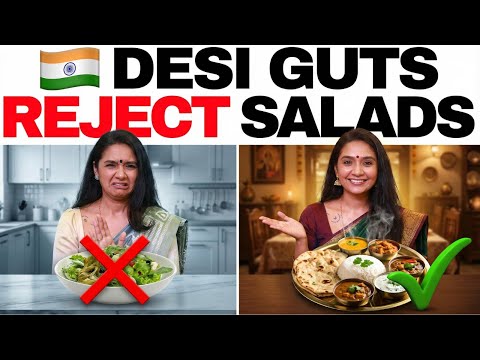
Are you an NRI, student, or expat living in the USA who feels sluggish, bloated, or heavier despite "eating healthy"? Millions of Indians move abroad and immediately switch to a diet of salads, cold sandwiches, and protein bars, thinking they are making better choices.
Who this is for
- You are trying to start something that still feels a little awkward and expensive.
- You would rather hear Neha's version while the mess is still fresh than get another polished hindsight sermon.
Key takeaways
- Stick To Culture-Centered Nutrition (& Why It Matters for NRIs) - w/ Neha
- Sourcing Secrets: How to find authentic, chemical-free Indian ingredients in the US (beyond just the local Patel Brothers).
- Millions of Indians move abroad and immediately switch to a diet of salads, cold sandwiches, and protein bars, thinking they are making better choices.
Transcript
The full conversation, right here. Auto-captions, lightly cleaned, still very much a real human conversation.
The roti that you are eating has very less protein in it and the roti that I am eating has actually quite a lot of protein. She shared that the same tomato that they used to grow in like 1920 versus right now in terms of the nutritional value of that same tomato, there is 100 different because of the degradation of the quality of the soil and such. It has been proven that the traditional combination of having such two chairs actually is very much equivalent to the way protein.
I am Naman Pandit, this is the Ready Said Do podcast and in this episode my guest is Neha Shah. Neha is the founder of Diaspora Nutrition which offers culture centered nutrition care and local food alternatives in the US for traditional Indian meals. In our discussion today Neha shares the many dangers of NRIs abandoning their nutritional roots to chase the latest and greatest Western fads and some simple ways to mitigate these dangers.
Green has to be paired with a meat or a dal, the dal has to be cooked in some spice and ghee, the sabzi has to be cooked in the kachighani or wood pressed of oil. I am hoping you can share for our listeners just some meal prep ideas probably both for vegetarians and non vegetarians. In line with our team of learning from somebody that's just a few steps ahead of us, my goal with this episode is to inspire you to consider culture centered nutrition and share with you the many benefits of doing so.
Subscribe on YouTube and Spotify for weekly episodes and daily clips from those episodes on Instagram and YouTube and now without any further ado, here's Neha. Welcome to the only podcast in the world featuring stories of high agency individuals who are just a few steps ahead of us. Hello, hello Naman, how are you? Ever since we've calculated this, I've actually been really buzzing to talk to you about just the incredible things that you're doing over at the askpura, but also just a topic that is so near and dear to my heart really.
And anybody who doesn't like eating, like name one person that will say no, I don't like eating food and that would really surprise me. So, before we know obviously get into the meat and bones here, no pun intended of this discussion, you know, like around ask for a nutrition specifically, which is your company that you've started. I do want to kick off here with the notion that Indians in America are best off if they stick to their nutritional roots.
I believe is the is the phrasing that you like to use, which I think makes a lot of sense. I want to begin by maybe getting your thoughts around some of the less favorable aspects of Indian nutrition. So, a lot of people claim that Indian food is too rich in carbs, it has too few protein and stuff like that. So, can you share your assessment kind of where it stands according to your perspective when it comes to the traditional Indian nutrition or diet?
Perfect. First of all, this is so thoughtful question because the first thing which is going over all in social media is that Indian diet lacks protein, Indian diet lacks protein. So, let me just break out to you into a very simple notion that traditional Indian diet, first of all, is not taught in terms of carbs, proteins and fats. This is the western lens of looking into the food. Yes, because when we see an Indian thali, what we observe is how is the combination of the foods. Are there all the six taste within one thali?
That's why you have roti, that's why you have sub Z, that's why you have some a char and that's why you have a chutney. But as soon as we reduce it into the form of carbs, proteins and fats, that's where all the confusion and chaos starts. And so, sir, you look at your additional Indian diet. Even if it is higher in carbs, what is the issue? Those carbs comes with the fiber. The same protein phobia people who are talking about, there is a lack of protein, but you know what, Indian should also have somewhere around 25 grams to 30 grams of fiber in every pit.
I heard it's nothing but the part of carbs. So, when you dish the carbs, you are also ditching the fiber. Secondly, there are so many sources of wholesome nutrients in such a way that every nutrient can be accomplished by a single thali. For example, what do you think is a protein rich food according to you in Indian diet? Sure. Yeah. I guess if we're talking vegetarian, lentils, or your beans, maybe even paneer, all of those things, I would say, and obviously for non-rich, you have your fish, chicken, whatever.
Yes. So, here's where we go wrong. If I say your roti also has a routine, people won't look into it that way. Yeah. But does, like I know it has some protein, but is it, you know, so I guess maybe what is really the bone of contention here is how much protein do we realistically need, right? And not for somebody that's young, that's trying to put on muscle. I'm talking about like your general person here, like your general, yeah, 30 year old maybe.
Yes. So, let's assume that we are not some athlete. We are every day human beings waking up to do our jobs, right, handling the house chores, doing the career part and looking up to the kids and coming back and sleeping, right? Now, there is no as such particular number that you should be focused on, but since according to the latest science, your minimum number of requirement for protein is 0.8 of your body weight in kgs. Correct. Yep. That's right.
Okay. So, okay. Now let's jump to one gram per body weight in kgs. So, if I am a 57 kg old woman, right, weighing 57 kgs, minimum, I need 57 grams of protein. Correct. Now, if I'm try way for some additional strength, you know, due to age factor, I need to put on more muscle or preserve more muscle from 57, how much more will I need? 60 cell, 70, maybe 20, but there is, but the crap that is going on right now is that you must need a minimum of 100 grams of protein.
So, from where you are shooting down the bar, and that's what creates chaos. They can point to that creates chaos is that is not a protein. Or it is only says that. Yeah. Yeah. No, that's just, I mean, I don't even want to, like, go there because that's obviously. Correct. So, then you bunked a few times. Yeah. So, now when I analyze my everyday thali, which has roti, which I am saying it has protein in it. Okay. Then you pair it with some legume or a dal pulses, which also has a protein in it.
You pair it again with some side salad and some subzi, which also has theograms of protein in it. Then you end up your lunch like a Gujarati family with chas, which has a periodic protein in it. Correct. So, no, we are not deficient in protein at all. The problem goes is where lies where it is that the food that we are having on our plate is processed version, due to which the roti that you are eating has very less protein in it.
And the roti that I am eating has actually quite a lot of protein in it. Because of like the what was used as in us, you're talking about the quality of the wheat. So, traditional Indian diet, when we talk, is that we used to have the wheat atta coming from the heritage variety of gamut, which our pairs used to mill it in the local chakivala without any removing any fiber and brand. And then you used to have that hot full gas.
But today we are having the imported version and the model wheat variety of atta, where to make it more shell stable, all the brand and fiber has been, you know, filtered out due to which you get low fiber roti and low protein roti. True. I also remember reading just, I feel like this is just a problem with, like I'm no scientist, but I, one of my friends back at Purdue was sharing, she was an agricultural something major.
And she shared that the same tomato that they used to grow in like 1920 versus, you know, like right now. I think in terms of the nutritional value of that same tomato, there is like a 100th difference or something like that. And it's just because of the degradation of the quality of the soil and such. So, do you, is that, does that sound true according to what you've seen while building out this? Yes, it is true. But then also, then what is the next step that we should do?
Should we become a victim of those systems or should we stand up for ourselves, right? So, let's support the small farmers who actually care about the soil, who does the regional farming techniques to preserve the soil quality, to preserve the seed of the original food, rather than having the genetically modified or genetically, you know, changed your modifications of the seed variety, due to which you have these low quality of food produce.
Nice thing. Yeah. Yes. Yes. So, I guess, can you also share a little bit around how one can do that? And maybe you can also segue into how Diaspora specifically is helping people do exactly that. Correct. Due to the fact that my journey itself started with the health decline after I shifted from India to U.S. Within, you know, first few years of reciting in America, I was going through this bloating, indigestion, certain food intolerance towards gluten and dairy.
Really? Wow. Yes. And many of my, you know, crimes also, they have come up with these reports, where even the doctor has said that, you know, they've run some tests and they say that you are turmeric intolerant and then you are doing tolerant also, no. Yeah. So, but then the solutions, what are the solutions? The only solutions that I get is stay in calorie deficit, have, you know, replace your rice with quinoa, have some anti-inflammatory, maybe a healthy pills, but I said, why would I have that?
There is no culture-focused solution because everywhere over Indian food and diet has been paramount. Right? That lacks this. It lacks that. It has too much of carbs. So, the solution that I get is to swap each and every ingredient of my Indian thali with some western alternatives. Interesting. So, what does that look like? Could you give us a few examples? Correct. So, the diet advice that I was given was to have overnight oats in the morning.
Got it. Yeah. I have heard that. I feel like that's very commonly thrown out just as an advice for everyone. Right. I feel like Sal mode. Right. Yeah. All have some ores. Okay. You want to have some Indian taste? You can have the oostula. Now, that is called cultural appropriation. Yeah. Okay. Then you can have some quinoa pula or a quinoa salad with some kale and avocados. Or a sourdough bread with some avocado mash on it.
Yeah. At which point, we've obviously moved pretty far away from traditional Indian food. Say, I don't remember ever eating a sourdough avocado toast ever. In my entire life, at least growing up in India. All if you can have a dosa, make sure to have some egg whites with it to increase the protein intake. Right. So, these are the steps that you have been advised for. And then it becomes unsustainable for you because it doesn't come naturally to us.
Interesting. Right. And that's where I thought that let me do one thing. Like, I am seeing the results, but I'm not happy. And it just, all the weight and routine comes back twice as what it was earlier because it was not sustainable for me. And because you fall into the old bad habits, and I say bad in air quotes, but bad habits again, right? Because you didn't look at the root cause. Oh, yeah. Exactly. Correct. Like I have reduced the process junk and everything.
But I am eating by roti and every dal sabzi, but still I'm not getting results the way I should. Right. And then when I move away from that basic thali and try these Western alternatives, first of all, it's not tasty. You're just trying to make it tasty by putting some spices and oil and key and all those stuffs. Right. And that's why it's not sustainable. And finally, I cannot, each and every time I cannot, you know, put the data into my calorie-tracking app or facial rate and my kids are watching it.
What is mama doing? Like why is she measuring her food and eating? Yeah. And that was giving me more cringe feeling than ever. I understand. Yeah. Obviously, that's not fun to do every time. Right. I can understand doing it once a week just to gauge how you're doing. But of course, they are doing it with every meal is, I don't think that's sustainable for anyone. Yeah. And plus it also disturbs your relationship with the food. Like we always do it.
And that's when I decided that let me just, you know, study on nutrition, where they're not talking about calories and all those stuffs. And when I was studying inside this Institute of Integrative Nutrition, I figured out they're not talking anything new. I mean, these were the things I was doing in India or my parents were doing in India. So what is that missing here? And sorry, what was this Institute? Could you share a little bit about that background? I think that's super helpful for context.
Correct. So the Institute where I studied my nutrition is called Institute of Integrative Nutrition. I had, and they talk about the holistic perspective and saying they start from the soil quality and talk about that food. So when they were saying that we should have wholesome foods, we should have hot and home cooked meals, or we should get it freshly milked flour for your baking purposes because American food is like all pancakes and baking bread and everything.
Then that I used to spiral down back to my memories of my childhood. I said, this is nothing new that they are saying. Right? Why this industrialization has brought rice brand oil? I said exactly why this Buffalo oil came first place in the market when we used to have the traditional oils. So I started connecting the dots. There is the problem. was when our traditional Indian diet pantry sourcing started shifting. So instead of going from local Kirana store and getting the things from there, we started going to the AC supermarkets.
And started getting this Buffalo oil, dalda ghee, ashirwadatta, desh khanamak, tata namak, correct? So these are the marketing limits that, you know, they threw this nostalgic flavor inside it and we tend to buy that. It's convenient. It's white and it's soft. You know, fall for those things, polished rice, white rice. But this was not the case traditionally. Traditionally, we used to have coral fiber roti or unpolished rice. Which is low glycemic, by the way. Then we used to have this kachigahani wood pressed oil.
We used to make ghee at home because we used to have tabila vala dud rather than tatra back dud. So these were the glucose and gaps that I could identify. And then I founded diastro nutrition when I created this nation white directory of how to source the same authentic Indian food locally in USA. So when you say that, I can first of all, because of the wonderful context that you gave, I can appreciate why you would want to do that, right?
That I am completely on board with because obviously, yeah, everything you said drunk through, you, I would any day rather have food that was that I know the person that, you know, collected it for me or harvested it or whatever versus it coming from a packet, right? I don't think many people would dispute that. So that makes complete in total sense. But I think then what you said about being able to source these and not even in India, because now we're talking about a whole different country altogether, that feels like a very, very difficult problem for me to solve.
And I'm sure our listeners at this point are definitely wondering how did you manage to do that? Because that feels, I would, I don't even know where I would start to, you know, solve that problem. So can you share a little bit about that? Like, where did you source these people? How, what was that process like? I think that would really lend a lot of credibility into, you know, any, maybe any skeptic out there. That's exactly because that is how I started my own struggle. I started pinpointing from where to find, from where to start even, right? Right. So first thing first, I started with the deed, atta. So first you see what are the rich fertile soil in US. And then it came to know that wheat is growing here also. Then I started connecting to the farmers community. Go Facebook groups.
Right. Yes. And they are very, you know, tech savvy farmers. So they had a call newsletter also. Oh, wow. I had no idea. Awesome. So join them and there they share the raw stories of how do they farm? What are the techniques they are using? And even these farmers are complaining about the industrial methods and that they want to be staying rooted in the traditional agricultural methods that take care of the nature, take care of the soil, take care of the seed, and take care of the food that has been grown there.
Yeah. I definitely have a lot of American friends that feel very strongly about this as well, that want to go away from the industrialization and, you know, shop local, farm local. So I know that's already a big movement within American people as well. So I think that is interesting. What you're saying that you were just kind of able to ride that same wave, although just for a different use case, right in your case, which was to connect that or service that bridge between those farmers and any people that might be interested in getting or procuring their products. Correct. So, so now even there are local U.S. and millers who mill their wheat fresh and then, and then, you know, deliver the fresh flour.
They, they put the date of manufacture, they put the date of analyzing and they will write that it is fresh for only four months. Right. So when I brought this art out to my house, what I, I read through the nutrition label also. It has two eggs more fiber. The roti that you might be eating from Indian supermarket has three grams of protein. It's written there. You can check it. The roti that I am eating is six to seven grams of protein.
And not just protein and fiber, even other vitamins and iron because the beat is red in color, it is high in iron. Now, who says you can't get iron from vegetarian diet? It's because you are not getting that nutrient rich foods. That's why you were lacking in that. But now my saying food has higher B vitamins, which again improves the metabolism of carbs. So yes, they are higher in carbs. Our food is higher in carbs, but so is our nutrient profile, which will help our body to metabolize it. Yeah. That makes a lot of sense. So naturally, so, so just a quick question, I guess, before we proceed. Does diaspora in nutrition, is it vegetarian? We will help you in sourcing the local water.
Then, in Namak, there is such a great U.S. hostel line, right? In eastern side, I'm western side. So why can't the salt be hand harvested from here itself? So, did you similarly make connects with salt? Our western is as well, same as the wheat millers. Salt, harvest, utter millers, local milk, fresh, you know, guala system that can get the local milk from the nearby farms, wherever you are staying. And it is rich in malai. It is rich in enzymes and everything. And you will love it. Like you will go back to your grandparents' memories where you will add such rich milk. Then, ghee also, and then comes your rice. Rice is even grown here. So why not go higher? Yes, rice from the California farmers are very famous for producing good quality of rice, where there is low arsenic heavy metal contamination. So we do that also.
Then, the meat also. So from where can you have the local chicken, local eggs, local mutton, if you are eating that? Anything but which is not? Because the animal care is very important. You know, the packets that you get from Costco, you know, like the chicken breast getting from Costco, you buy it in the bulk and you eat that. It is not good because the feed that they are giving to the animals They feed genetically modified soy and corn. And you know what you eat is what you are.
So what the animals are eating is exactly what the animals are. And then you are eating the animal and then you become that. And that's how this inflammation just increases day by day. So any regular food items that you have on your Thali, we help you to source it locally so that your material profile has been 10x more than what you were eating before. So now there is no problem of high carb or low protein or you know, not rich in fiber or not getting enough magnesium.
Those problems just go out automatically without any counting You are eating some good food and your body is starting to do its own job. The organs are behaving well. The hormones are getting balanced. Your insulin resistance is converting into insulin sensitivity. Every aspect of your health, it comes into race automatically. Just by sourcing your food's right. Yeah, no, that sounds quite incredible. I think from there where my mind is going next is, can you for so I'm assuming at this point that because I certainly am, but a lot of my listeners must be curious about, you know, what is it too expensive because it sounds really good.
And usually things that are high quality are also pretty expensive. So are you willing to share anything about how like is it a meal kit? Is it like a subscription that you get every month and kind of maybe if you could go over any charges and such. I'm not sure if you can write up the bat, but it is a question that I'm sure many will be having at this point. Of course, it is a little costly than what you're eating now. So let me tell you like this. Cheap food is giving you cheap nutrients. And it's giving cheaper health results, right?
Which is costing you a lot more expenses behind the health care system in US, which is not so good. So now as a student, right? When you go for the college admission, when college promises you that you will get guaranteed placements, job placements and one, say, depends on your skills. So which one will be your cost to your college? Yeah, I mean, I would obviously want to invest in the more secure option future wise. Yeah, so I would go with it. Security is not only job wise or career wise. You need to look at your security health wise also. If your engine is not working properly, you will not be able to deal with the stress as an immigrants when we move away from the house. Imagine the stress levels have increased today a lot, but our grandparents will somehow be able to manage that stress so nicely, even with minimal means and money.
Here we have a lavish lifestyle, clean air, clean water, clear roads, and see we are not able to deal with us everyday stress. It's because of the food that we are eating, because we prioritize the food last. We are not willing to pay the money for the food that we are eating. So yes, it is little cost, but you need to prioritize it. So how do we need to prioritize it? It is my next question, right? Keep your meals simple.
Keep your food as only non not have processed food that happens. Yes, it can be very simple. Eat like a celebratory or any athlete. They eat same foods everyday. Yeah, that's true. You know, but they have same money like that more, right? But your temptation of putting more money behind the food comes from the food that comes from. Let's have a snack, right? And then you finish up like two packet of chips and hate yourself or the net.
That is not your fault also, because you were eating the low nutrient profile of food, which was not giving you that satisfaction, which was not signaling your hormones properly. You were craving the snacks as soon as you change your sourcing, which is a bit costly, you will find yourself that you are respecting your money, you are expecting the food, and you are not having the temptations of snacking because you are getting so much of nutrients from the same amount of food.
So when you say a little bit more costly, can you just put maybe a range for us and just, you know, curious? So, like, different food products have different things. But it will be like a 12 to 15% more. I mean, that doesn't even feel like that big of a markup. At least for the benefits that one is getting, I would, I would imagine. So for rice, for any grain item, it will be 12% increase. For richer foods like milk, it will be more than maybe 18% income-y.
And that's why, you know, when you go into our traditional wisdom, people with cows were Because milk is the ultimate superfood and that's why its cost is higher. And milk is the only food product whose processing will increase its nutrient quality and hence Like a butter is costlier than milk. Cheese is even more costlier. Cheese is costlier than milk. Cheese is the costliest of all because it has a highest nutrient superfood quality inside So why is it getting costlier because its benefits for the body is also increasing? It's just more valuable for, you know, some nutrition. This is all, you know, very, very fascinating.
I am curious, obviously, because you've been doing this for a while now. Something I like to ask guests on this show at least is, and I do know, which is something that makes me happy when I listen to that, is really just success stories, right? Or any anecdotal things that you can share, obviously, without revealing any names. But maybe if you can share a story of maybe somebody that became a client that was facing a certain issue, but then because of diaspora, they were able to turn it around.
I feel like that type of thing really helps the listeners contextualize really the, you know, tangible and intangible benefit that come from something like, they are so many I'll tell you one client came and she was suffering from type two diabetes. So while she became pre-diabetes and then diabetes and her doctor and the nutritionist from the hospital told her to quit the rise just to have quinoa or oats. And so basically she was not happy and she was having these western dense dietary food And still not seeing the results in, in so much so case that she was being hospitalized and bedridden because of insulin shooter.
And she came to me, I'm not a medically cleaned nutritionist first. Let me tell you, and I don't heard that, but I know what will help you. So if you have that faith, we need to take the action right from the day one. So are you there with me or not? And she said yes, because I have tried this for last eight years. And dodging the nutrition and this is Latin on medicines, but that there is no relief within three months of not just within three months, within first 20 days, first with it two to three weeks, she started seeing the drop in her blood sugar levels.
She was energized and within three months she came out of her. She lowered the, the doctor lowered the medications. There is no dizziness. Just from switching to cleaner nutrient risk and also following, let me tell you, follow the time tested rules of Indian food combinations. Can you tell me a little bit more, but what does that entail? Your dream has to be paired with a meat or a dal. The dal has to be cooked in some spice and ghee.
The subsea has to be cooked in the kachighani or but pressed off oil. That is a competition. The rice when you are cooking, cook it in open pan, add some bay leaf, add some kalonji seeds and that will reduce the glycemic index. Mummy, kitara, muzho, mar, horta, rice, kapani. All these time tested combinations and food preparations that has been passed down through generations from sasuma to bahu. That is exactly what we, you need to do inside our holes. And she saw the immediate results.
The problem, the gap was there was no one who could understand her cultural background. Especially in the US. Sethir, on the number of protein that you should have on your plate. That's actually really cool what you said about the removing the mud. I didn't realize there was a benefit to doing that. Always, you know, like we don't have faith in our own traditional systems. I mean, it's not, I, at least personally for me, it wasn't about the faith.
No one just, no one ever told me that this is why, like, or this is the benefit that comes from doing this, you know. No, there is, exactly. There's no one who tells you who realizes you about the traditional methods of preparation, except if you are going to an eye with the, you know, doctor, or wealthy, or I'm with the certified nutrition post, it's the only that person who will tell you, but not the regular nutrition coaches, or the AC fitness coaches, they, they don't care about these What they are only looking about is, you know, the westernized flats of your dry protein again, those carbs and proteins and nothing else.
So that is where the gap is and that's why I created this diaspora nutrition to bring you closer to your Indian roots. The second example I could give you is that people were having bloating issues. The doctor told that you are gluten intolerant or you are lactose intolerant and they give the signs, see, you know, research, bag, the papers and show them that, you know, what, with just, you know, age or you have shifted your country.
So there is no gut diversity and you become lactose intolerant, which is pretty much, He says that when I'm going back to India, I drink the milk, nothing happens. When I come here and I have anything, it just bloats, it hurts. So even if the weight is in check, the BMI is okay, the Bay fat is so much and it's hard bloating that they don't feel good about it, right? And what they do, they go for expensive stuff, like yalman milk, oat milk, right?
And then they will have the quinoa roti also, like, make the quinoa ata and then make roti out of it, or they will have jawa roti. But they say that every day I can't eat this and eat the quinoa. I don't blame them, I don't think I could eat. And as well as this wish to source, they are good, as a ghee laga roti keeper because it's fiber rich, people will tell you to have one gallon of water, no, have ghee on the fiber rich roti so that you can digest it better.
Yeah, I think the really, I feel like the underlying, you know, key takeaway here that I'm picking up is we do have, and I'm saying even just outside of nutrition, right? So I'll give you an example. Recently I threw the Huberman lab podcast, which I don't know if you've heard of, but he's like a neuroscientist, he talks about how the brain works and such. So one of his protocols that got really viral and that pretty much, you know, little millions of people heard this and now implemented is to just every morning it is good for your body and health and general well-being, et cetera.
If you look at the sun, when it's at a lower solar angle in the sky, like when it's just rising up and he explains the reason why he goes into how the light goes into, you know, your eyes, which is a part of your brain because our eyes are literally a part of our brain. And then anyway, like a bunch of stuff happens and like he basically explained the reason behind doing that. And then I was talking to this, talking about this with a friend who, and then my friend said that, okay, great, but what's so new isn't that just Surya Namaskar?
And I was like, yeah, but also no, because nobody ever explained to me why I'm supposed to do Surya Namaskar, right? And I really think that's the gap here and I love what you said about, you know, trying to bridge that gap because I do feel like if we do that here collectively, you know, just between you and I, but obviously other people in this space that are involved. I do think that a lot of we will be able to turn a lot of they see people in the US closer back towards their roots just because it's not a he said she said, but because it works. And you know, there is a reason behind these things.
So that's really the key thing that I'm picking up, which is I think that's really cool. And that's, you know, blowing my mind a little bit. Thank you so much because what really matters is, you know, why people don't resonate with this thing is people have so much moved away from the common sense, sickle, you know, steps that they are finding what is the science behind it? every time and I need to tell you that, you know what?
The things that we were doing over as such as we're doing is was and is the part of science Yeah, it what is this far? Yeah, we exist because of that in part at least, right? But the beauty is that instead of fixating on some science jargon words, they made it as a regular practice in our body in our horse, right? It was a regular practice to have the respect to the food because it's an anapurna Devi. So, it's like home like kitchen is called the heart of the home because it, just like the heart in our body punks the blood to entire organs, it's from the kitchen that gas from well, if the good food is made, the entire family is getting nourished. So this was a daily practice that was happening.
There was a daily practice of being gratitude, gratitude showing a gratitude before the food There was a daily practice showing the gratitude towards the nature, right? That there is through getting water to the tusi plant. Now, today in West End world, everybody is studying what is the, you know, healing aspects of turmeric and tusi leaves and I'm getting into a pill form or a dried herb form, but being you this already.
So when my point is when you have some questions, when you doubt your own customs, you do definitely because I also did and that's how you become a seeker, become a seeker rather than becoming a rebellious because when you seek the knowledge, the knowledge is out there already. Saraswati Mata is carrying the knowledge out in the universe already, but once you seek, the correct pointers start coming in front of you and you will find your answers.
So, question and seek rather than just abandoning and saying that, okay, this doesn't works where is science behind it? Yeah, no, I agree with everything you said. It's almost a case of making, you know, traditional Indian customs and our really knowledge cool again for lack of a better word. And I think it can only happen through, yeah, seeking the truth side, it won't happen because of me or you saying something. It's just people that have to dig deep, figure out for themselves, right? Is this the truth?
And if it is the truth, then act accordingly, there's no need to dispel it just because it's in my customs, then it must be wrong. A lot of people think that way and yeah, I don't think it's justified. Like I think at least everything deserves its own, you know, neutral, just examination, you know, for lack of a better word, but yeah, no, that's super cool. And then I guess moving on from there, one of the questions that was really requested when I put out a feeler on my social pages about, you know, this chat that I was going to have with you was a lot of, you know, bachelor men.
So we'll just say they see men or like students in the U.S. that usually live by themselves or with roommates that just eat like garbage. And I can say that with confidence because I was one of them and I am ashamed to share just how many times a dinner was just, I don't know, like store-bought, frozen paneer paraca. I've had at least hundreds of those and never felt right. Never really felt like I was getting any good nutrition, but it was what was available. It was quick and easy to make. And you know, so that was that.
I'm hoping you can share for our listeners maybe just some meal prep ideas probably both for vegetarians and non vegetarians. But you know how they can go back to their roots and maybe just make some things that are actually nutritious for them and are not trying to actively cause harm to their body. You know, Vangar, there are so many shortcuts that you can do is, first, you can get a dahlia. You know, the broken wheat, instead of suji and making upma because suji is not good quality So bring broken dahlia, broken wheat, and have dahlia ukma, dahlia pulla, dahlia kittri, eating the dahlia key sweetened part with the blue. Even that you can handle. So that is very quick to make. You can make it a pressure cooker also.
You can get some basin or satu and make some satu ka chilla, right, visadahi and chakni. Or you can get it. You can even have just satu in water directly also, right? I feel like even that's pretty nutritious. It's full of protein. It's full of water, actually. You have to pair it with some things because it's a pulse. You need to pair something. And according to the latest science research, it has been proven that the traditional combination of having satu chairs, which is satu in your buttermilk, actually is very much equivalent to the whey protein. Didn't even know that was the thing that people drank.
So from here, I'll tell you like a little bit of my background. Why is there so much about this is I'm a Gujarati, but I was born. I was brought up in. Charkan, which was the part of Bihar. I am originally from Bihar. So we have that in. I was brought up in Bokarho, Bokanha city near the Ibar. But my ancestral house is in Maharashtra near Napur. I did my engineering four years from Jaipur in Rajasthan. I work for IBM for two and a half years in Kolkata. That's where I live when I'm in India. So you've been all over.
And then after marriage, I shifted to Hyderabad, but my in-laws families, they are the business owners of transportation and they live it throughout Kolkata. So I know everything about math. Even though I'm vegetarian, I know everything about math. I know everything about Satukaparata. I know everything about the South Indian rice kanji that they have. And similar, you have rice bath, which is in the Uriya style also, the fermented one. Orgatici subzi from Rajasthan. So I pretty much know this.
And if we start comparing with the westernized lengths of the food, none of these foods will Like 10 to a Greek. So coming back to the, you know, pointers for bachelors is definitely chillies there. You can get some idli, nowadays you get organic idli batteries also. You can have some idli dosa with coconut chitney. You can get the frozen grated coconut. Just churn it in your mitzi jar and make a chapter on it. You can feel skim. However, you can use it whenever you want. That is also one thing. Any chitney is also as good. Doesn't blow to you and stuff. And they know it all great.
So the sprout salads also, you get it in the frozen section, just steam it at your home and then add everything to it. So that is also something. That would actually work really good as a snack. When you're trying to snack something unhealthy, instead you can maybe just snack on the salad sprout salad, as you said, because you can add your, like, all of the, you know, salt and such and make it like. So yemen, taniyokwa, lime, and all. Any, any chitney also that you can work with? That's super helpful.
I think that was, yeah, I'm sure a lot of meal plans are hopefully disrupted by what Hopefully fewer frozen parathas and more of, you know, those kinds of food. That that he just mentioned. And then really moving on to the last segment here, it's just something I'm curious about. What is your long term vision for the aspirin nutrition? Like if, if everything went your way, where do you want to see it go one day in the future? Like, what is your ultimate dream with?
My ultimate dream is that whenever anyone is coming to, you know, settle to US or whether it's studies or for job calls or settling down, each and every one should know what is the aspirin nutrition. This is the resource that I need to sign up for so that I can get my food sourcing properly. Because I want to become that big that you know, that the aspiration is a go to resource for anyone who is coming to, you know, from India to US.
So they don't have to face to the, to that strangle again, right? That is definitely bringing the more closer to their traditional roots, because that's the only thing that can help you overcome the stressful life of US. That's a good point. And on that effort, right? Because you've been obviously walking that road for a while. So I am curious, maybe could you share some of the biggest hurdles that you face so far that maybe you have already solved or are continuing to solve as we talk just for somebody that's maybe looking to build a community like similar to yours, right? Be a really good source of information for a lot of people. Obviously, that stuff is not easy to do.
You and I know that probably better than most people out there, just and me for just completely different reasons with the podcast and such, but yeah, it's not easy. But I'm curious maybe if you can share any takes around, you know, things that have helped you battle through, you know, getting more eyeballs, just, you know, be a really good marketer about this stuff. How do you, how do you approach those challenges when they are right?
I tell you, first of all, it was never easy because the thing that I'm thinking in my mind, how to project it out, right? That people can connect. In such a time, I was like feeling and I said, okay, you know what, let me just talk about healthy Indian diet, these are foods without counting any protein here, but that was not It's like a very similar tone, each and every one is doing like, like how to have a sustainable diet without being restricted.
So that was a very common tonal of messaging that was going on around. And what helped me was talking to my mom on a regular basis about what and how she used to eat and coming to know that her mama is the educated farmer turned doctor, the deep Second was definitely, you know, reading more about my scriptures, my Vedic knowledge. And if it is, you know, issue related stuff, but I could connect it to my food. Why is this done or why the Navratri fasting is done in the fall season because the season So we need to build a way immunity and that's why it is done and how common sense it was there in our life.
So when I started to connect these threads, I removed my fear of how I will be perceived Rather, I started talking in this sense only and the right people started attracted to I actually recently had a Vedic astrologer on the show and she said something similar. She was like, it is very difficult to decouple the Vedas from astrology and where like where the religion ends and astrology begins. And similarly, I think what you're saying is it very difficult to decouple like the nutrition where it ends, where the like rituals begin.
It's also deeply interconnected that it makes it really interesting, makes it really cool I'm obviously not even close to any sort of a subject matter expert on that. But it is something that I have been more and more interested in and hopefully similar to you, I can probably start reading some of our scriptures. It is definitely something on my bucket list, but Nya, thank you so much for taking the I've truly, I feel like very few conversations that I've had on this show have such a big shift in perspective, right?
And I think irrespective of whether we can argue about numbers, right? Somebody can be like, no, you don't need one gram per kg. You need one gram per pound of body weight in protein, blah, blah. I feel like what I'm realizing is all of that is besides the point. It's really the perspective that you bring to the table that matters so much. Stop villainizing something just because it comes from your customs or your tradition.
It still deserves to be weighed equally as you would with just, you know, just because some scientist in the West said so. And I feel like that is if, if, if he and our listeners will take just that away from this entire conversation, I will consider that a big victory. And I know that you know that it's not a small thing, right? It's a big shift in perspective. And it's only about to get better. So thank you for all that you do.
And I wish you all the very, very best with the ask, but I've been so lovely talking to you and thank you so much for having me. That brings us to the end of that episode with Neha Shah. I was very inspired to learn what a big difference it can make to just stay close to one's nutritional roots, which in the case of NRIs and most of us watching that is Indian food. If you'd like to support me and if you found value from this episode, the easiest way to do that is by subscribing on YouTube and leaving me up to a five star anyone's Spotify or any of your favorite podcast apps.
Something that goes a long way for me is if by word of mouth or just by actually literally sharing videos and clips and shorts and such with your friends and family or somebody that might benefit from one of those. It really makes a big difference. Thank you so much for continuing to do so. And thank you also for commenting below in terms of guests, any feedback that you have Thank you so much and I hope you would continue to do that catch you all in the next one. New episodes every Wednesday.
Transcript-backed moments
A few lines worth stealing before you hand over the full hour.
The roti that you are eating has very less protein in it and the roti that I am eating has actually quite a lot of protein. She shared that the same tomato that they used to grow in like 1920 versus right now in terms of the nutritional value of that same tomato,
there is 100 different because of the degradation of the quality of the soil and such. It has been proven that the traditional combination of having such two chairs actually is very much equivalent to the way protein.
I am Naman Pandit, this is the Ready Said Do podcast and in this episode my guest is Neha Shah. Neha is the founder of Diaspora Nutrition which offers culture centered nutrition care and local food alternatives in the US for traditional Indian meals.
In our discussion today Neha shares the many dangers of NRIs abandoning their nutritional roots to chase the latest and greatest Western fads and some simple ways to mitigate these dangers.
Green has to be paired with a meat or a dal, the dal has to be cooked in some spice and ghee, the sabzi has to be cooked in the kachighani or wood pressed of oil. I am hoping you can share for our listeners just some meal prep ideas probably both for vegetarians and non vegetarians.
Show notes
Are you an NRI, student, or expat living in the USA who feels sluggish, bloated, or heavier despite "eating healthy"? Millions of Indians move abroad and immediately switch to a diet of salads, cold sandwiches, and protein bars, thinking they are making better choices. Yet, the "Freshman 15" turns into the "expat 20," and gut health issues skyrocket. In this deep-dive episode, we uncover the uncomfortable truth: The American definition of "healthy" might be destroying your gut.
More in Bet Weird
Same mess. Different guest. Pick the next conversation that feels closest to your real life.