
Episode 92
How To Help Rag-Picker Children in Kolkata Escape Poverty thru Education & Empowerment - w/ Shafkat
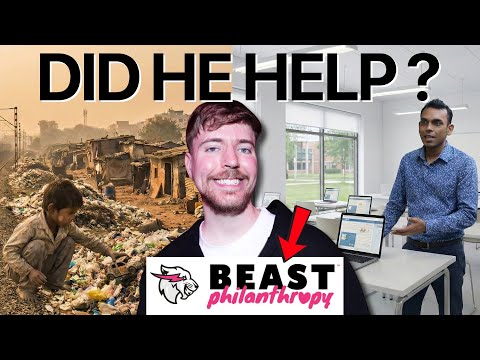
The Reality Behind the Viral Video When the world’s biggest YouTuber hands over a check, the internet asks one question: Is it real? Joining us on Ready Set Do is Shafkat Alam, the Joint Secretary of Tiljala Shed and the man who stood face-to-face with MrBeast’s team in the heart of Kolkata’s slums.
Who this is for
- You are trying to start something that still feels a little awkward and expensive.
- You would rather hear Shafkat's version while the mess is still fresh than get another polished hindsight sermon.
Key takeaways
- Help Rag-Picker Children in Kolkata Escape Poverty thru Education & Empowerment - w/ Shafkat
- Gen Z Reality Check: Shafkat offers sobering advice to young people wasting their prime years chasing government jobs that may never come. His message? Get focused. Get skills. Get moving.
Fast scan timestamps
Transcript
The full conversation, right here. Auto-captions, lightly cleaned, still very much a real human conversation.
This is one of the most heart-wrenching videos we've ever had to make. And although this problem seems almost impossible to overcome, there is an organization making "In a country like India, the way poor people are treated, they face a social taboo because they're dealing with dirt and garbage. So people consider them as a dirt and garbage." Shafka is the managing director of Tiljala Shet. Joining me on the podcast today is Shafka Talam. Join Secretary and Chief Fund reason at Tiljala Shet.
"There are very few people with whom I've had the chance to interact that even come close to the impact that Shafka has made on the world and more than ever am just so honored to host him as a guest." An organization started 36 years ago by his father, Alam Ghir, who worked in these slums as a waste picker for many years. "They have laptops for the children. They have a girls library which is in itself a kind. They have science, project exhibition, competition.
We covered the incredibly diverse, strategic and logistical challenges. Shafka's face is on a daily basis while helping children and you'll never believe how much creativity and religious due diligence goes into successfully solving them. "If you're feeding your child one ice cream and if there's a poor child standing there, just have another ice cream. If you can afford, you don't need anybody to start help anybody."
Do you ever get a pushback from the children where they're like, "No, we want to pick I'm about to aspect of it." Here at Ready Said Do, we know that the only way to learn is to do. My goal with this episode, therefore, is to spotlight how anyone can make a positive impact in society simply by doing their bit and also to spread awareness and raise capital for this incredible organization. "They funded for more than one year, actually, for our entire education program.
He's earning a lot of money from the social media, but he's also giving it back." And subscribe on YouTube and follow on Spotify for weekly episodes and now without any further ado, here's Shavkat. "Welcome to the Ready Said Do podcast, where we learn from journeys of not experts who are just two steps ahead of us." Thank you so much for having me here on your podcast." Tell me about the MrBeast collaboration. Did he, was he the one that reached out to you?
Yes, he there, MrBeast philanthropy, so actually the star is MrBeast, but their philanthropy name is Beast Philanthropy and they're based in North Carolina and US as you know that. So they reached out to us and through our common contact and you will be surprised to know that at that time, I never knew about him. Again, this was a couple years ago, right? Two years back, yeah. So I really didn't know about them and then when I came to know that he, they are so big, and when I talked to my organization kids, you know, and then they heard that MrBeast is, I was going to have a collaboration with us, they said, "You don't know MrBeast? You don't deserve to be on this earth." I got the feedback, you know, children were mad for it. So yeah, they are, they are.
And there I started searching his content and then I understood, okay, he is bigger than almost all the Hollywood or the Hollywood stars. Yeah, yeah, yeah, definitely. So basically I had no knowledge and I was like, I was feeling very like, "Oh my God, I don't know him." So I don't watch too much YouTube. So maybe, and I think the primary audience are the children. Yeah, yeah, yeah, yeah. And like young adults, yeah, I would say young adults to children are the primary audience, So I obviously had, I'm aware of MrBeast, but yeah, I don't, I wouldn't say I've seen more than five of his videos, you know. No, but since then I have been following him.
So I know, I know very much clear, like, and he had in Amazon Prime, Beast, Games and then, you know, a lot of things happened and we got the privilege to work with their organization, which was a fantastic collaboration and they funded for a year. So it was not just the shooting. They funded for more than one year, actually, for our entire education program. So it is not just, you know, so he's earning a lot of money from the social media, but he's also giving it back.
So that was actually going to be one of my questions because, yeah, as you said, a lot of people feel like that all of the beast philanthropy stuff is, you know, under the table, it's not really very legitimate and there's bad practices going on. But it sounds like you're saying that they did a really good job. They held up their promise. And they kept the promise and actually each and every promise, whatever they had, they made, you know, before the contract and even after the video was released, you know, we got to raise a lot of funds on that video itself.
A lot of people even say that, you know, true philanthropy is not to be advertised, right? Like if you're doing philanthropy, then what is the need to get views on it and all of that, which I don't know, like it always just, it feels like a double-edged sword for me because there's no like right answer, but as somebody that does this, you know, so much, I am curious for your perspective on just philanthropy, right? Like what do you think that doing philanthropy and sharing about it negates the value of the philanthropy that you did?
I think if you're doing philanthropy in a personal level and it is a completely a personal individual choice, whether you want to show it, whether you don't want to show it, it's completely a personal individual choice, if you don't want to show it, I'm also with okay with that because there are anonymous donors also, so a lot of people say, you know, they don't please do it, don't take my name, I want to help you out but don't take my name, we respect that and there are people who wants us to post on, yes, take notice, so I am completely okay with both of them.
The end of the day, who is getting the benefit, you have to think back. These are the children which you saw on these videos, you know, the best because children. At the end of the day, your contribution is making a difference and that is what is important for me as an organization at one of the trustees. So I am one of the joint secretary of the Ljana shared. So my duty is to create and you know, search networks, reach out to people and as I told you, there are, so it's both ways, I respect those also who don't want to be in the picture, don't want to be in the limelight, they want to be somewhere in the behind the screen and they help me and there are people who want to be in the forefront, so it's a personal But as long as the end result, the end result is with your contribution, with your hard
and money, which people have been contributing as for the past 38 years, because my father found, you know that my father founded it 38 years ago. So I think everybody is important for us. So can you explain for us, you know, the, some of the key initiatives, maybe some of the key projects that you work on and how that has been going for you? Tyljana shared works with the waste pickers children, that is our primary focus.
You must have seen those who have visited India or Asian region. You can see children collecting plastic garbage from the roadside and their families. So this is the waste pickers community. So we work with the waste pickers community and other vulnerable communities. Those who have make a living out of the waste, trash, trash, we throw outside. So they make a living out of that. So these are our primary beneficiaries.
And there are other beneficiaries also who are not practitioners, but they are also in a very bad condition, economically. But, but by radicals, because these are the people who have been always socially boycotted by the middle class, even the slum people don't want to mix with them. So they have been facing social ostracism in India for the past so many decades. So when my father started working, he was the first law graduate from the slum community, from where we started work. That's the reason Tyljana shared.
So he started the, so Tyljana is the name of the area as you know, as you are from Calcutta. So you know it very well. So Tyljana is an area in Kolkata where it's one of the poorest areas in Kolkata actually. And you will see a lot of these pickers moving around and then he started work in 1980s. He was the first slum graduate from this area. And when he got a government service, so he became a primary school teacher.
And he because he never practiced law because he never liked the law profession. He says for being a good lawyer, you have to be a liar. So he never loved the law. And even though he has a degree, he has a degree. He never practiced. And he never practiced. Almost the 90% of the children were not in schools, especially the advocates. They were picking up plastic, glass, bottle, tetra packs and you know all these things, which has a value.
And they used to sell it to the strongest and they used to get some money out of it. So child labor is this because even the children used to collect in those days and they used to bring at least 50 rupees, 40 rupees something like that. And that has a lot of value for a family like that, right? Like it's not just 50 rupees that they're okay without like they need that. It's super critical for them and find all those things which has a value.
So it is a very very difficult job and with no gloves and nothing, you know, so they do So and in India, you know, there is no system of proper trash, you know, like in America you have different beans for different and public are very much aware. And in India, still we are way to go to practice such things, you know, where we can expose the garbage in a proper scientific way, the way it should be. I will say it has changed a lot, like it is definitely improving from what I've seen. Like I was just in Kolkata in October.
And I noticed like the streets were, you know, definitely much cleaner than I used to remember But of course, that is I'm talking about like main heartland Kolkata and I am sure that it hasn't been as effective in areas like till gel or other surrounding areas yet. Yeah, it is unfortunate that the rate of change is so slow, but you know, one can only be hopefully optimistic about where it's headed. And I do want to pick your brain on that also later. But yeah, for now, I let you continue.
So you, your father then made, he helped all of these children go to school. He made him realize the value of education. And he put them into government schools because the government school never had so many students, you know, students that are going down, down at the number of students that drop out. So he brought a project, you know, where we got support from an American based foundation called Trikala Foundation, New York.
It's a based in New York and they supported us for 25 years. So it was $100 in those days, $100 grant, one family fighting poverty, one business, That was a slogan and they used to get, but it was a conditional grant. So you don't have to pay, I see. So it's basically like a startup fund in a way, like it's not like a tech startup, but a business startup fund, well, you, you can use the money to do, you know, bootstrap, whatever, but your child on that condition cannot be picking rags.
I mean, to understand how to do it, yeah, run the business very efficiently. So all these are conditions. That's why we said conditional got it, sort of got it, got it. So that was the most popular. Was that effective? Did it work? Well, very much effective, very works effective. Initially, people were taking it, you know, maybe using it for other purposes. We got the lesson, you know, I know over the time, but this process became very systematic and we could identify, you know, we had self-help groups, we could identify German candidates among the people who really wanted to do business and who really wanted to do change lives.
So eventually the businesses become better and better and better and eventually their children went to preschools. And when my father started the average age of the girl child was married for was 13 years I'm talking about 80s. And now the average is has gone down to 19 years. And in those days, as you know, never nobody wanted the girl child. I'm not telling nobody, but majority of the people have to do this. Yeah, there was a stigma for sure. And there is still a stigma.
So he started, so we got a support from an Italian organization called Idos, where we used to support girl child education only. So the family used to get some cash assistance to ensure that girl is in school. So because of that, you know, the family used to keep their girl in the schools. Then you mentioned that there were some criteria that you used to look at to identify which people were genuine to be given the grant to.
Can you tell me a little bit more about that, because it feels like such a difficult problem Like, I don't know where I would even start. So how did you do that? The percentage came down to this. And over the time, you know, more and more genuine candidates came and more like they built businesses, many, many had small businesses, they expand the businesses. So it was a excellent initiative by the donor agency and by our organization to help fight poverty economically and they used to getting up because if you go to bank, you will not You know, that you need to collect all this, they don't have.
So here you can get in your bank account, immediately money, you can get the money in your bank account. So initially we started with cash, but then eventually we ensured that you have to have So if you don't have a bank account, we will also help you in opening the bank account. It's not that you do it. So suppose, I know the problem, you know, because the problem, they don't have proper documents or like, you know, most of the families are actually from Sundarvans, just letting There are families from Sundarvans, they have the documents from Bihar, but majority are from Sundarvans, Goshaba, Loki, Kanthapu and all So we used to help them with documents and, you know, talk with the bank and we also used to talk with the government officials, you know, how this can be done, we used to regularly
meet with the counselor or MLA, allocated representatives, bureaucrats, to see if the problem can be solved. And I also want to touch on the children briefly here, because obviously that is, you know, the whole point of all of this. If you're a rack picker child and you were doing that for pretty much your entire life, and then suddenly somebody is like, no, now you have to go and sit in school, do you ever get a pushback from the children where they're like, no, we want to pick rags, right? Like this is what we think is better for us. So let us do this.
I don't know, I don't want to go to school, et cetera, et cetera. Does that, does that happen at all or not really? So there are two aspects of it. First, I would say there were children initially when we admitted to the schools, you know, they were in days to go to school in a very mortal meat and tidy condition. So there were problems from other children who were actually coming from little bit better And you know, they said we don't want to sit with them. It's even like a nails are cut, hair is properly combed. You should take a bath before you leave for school.
So all these things, we, they're also helping it on this side also and also we had a discussion with the principal, the headmistress and with also the teachers, you know, that they are from a very different background. So you have to really help us. You know, if the first generation of learners is done, then the entire, the other people So they also really understood the problem, you know, and it worked. Everything worked.
And I, and if it's second, second question, you said that the replicas wanted to go back for work and everything. So you were saying about the children feeling empowered and they were wanting to go, you know, not, they didn't have money anymore. And that was being a problem. So when you have money, you know, don't, you have so much power, you can buy things. You can do a lot of stuff. So, so there what was the problem where a small group of children, you know, they blocked out and that was, that was happened.
And many children also used to do, you know, they inked with somebody, somebody wanted to marry at the age of 14, 15, it was very common. And still these things are happening, but like happening at the age of 16, 17, the percentage is considerably very low. But majority of the children are now marrying after 80. That is a very good. Oh, yeah, and others are also following, you know, earlier there was no career, there So initially we focused on primary shoes, primary screws.
So we used to create a, you know, like, but you know, class high six, the key gap, I think these two, yeah, complete until class five or six. But then, you know, we saw that after class five or six, they're getting brought out from They're getting married or they're wasting the time, you know, in the community. So we started the evening classes, which was class six to class three, and also we supported class 11, 12 as well.
So that really helped, you know, so 10 years ago, 11, roughly 11 years ago, we started this program and this really helped. And we, you know, earlier, I had 20 years back, we used to have class for class 10 board exams or 12 board exams, we used to have single digit students, like four students, three students, five students. Now we have 50 students going to board exams in class 10. 60 students going to class 12 board exams. There are two children who are gone to graduation.
There are children who are studying law, who are studying law and they're lawyers now. One of the girls I would definitely like to mention, she, her name is Anam. She was like a class 10, she dropped out, she couldn't pass, and I motivated her personally to complete the education, anyhow, and she got motivated and she rejoined her schools. And she completed class 10, somehow she completed class 12 and then she said, sir, I will not go to go again and join the college, that is for sure.
So we don't force the children beyond class 12, even we do not want to force before that also we consult, we motivate them. So we have vocational training, industrial training. So we enrolled her in path sets, the path sets is a company you know that very well. All the airport food comes from there. So we have a collaboration with them. She did a training in path sets for around 8 to 10 months. So she understood everything related to industrial kitchen and everything, you know, all the She never saw such set ups in her life.
After that, she went to work in a few cafes, like she worked in eight day cafe and other restaurants cafes for two and a half years. Now she's in Qatar, never. In Al Saharguru, she's working as an assistant cashier and she's the first girl in her family to fly an aeroplane. She's the first in her family to go out and work like nobody in a family, no female in her family has ever gone out of the city. She is now in Doha, working and changing things for her. That is so inspiring, yeah.
So we have been doing a lot of vocational training for a lot of students who don't want to continue the education for, you know, yeah, so we have guitar classes. We provide a heuristic education. We have after school learning centers. So as is quite cool, we admit them to common schools, formal schools. But as you know, my father was a government school teacher and I, being the son of a government school teacher, never went to a government school.
Because the education quality is the worst in government school. So those people in the West, they don't, they don't know about this and everybody should know that the government school in India, the quality of education is the worst. And I never had the opportunity, I went to a private school and that is the reason I'm able to speak a little bit of English with me. So government schools, but there was the only option because private schools, education is so costly and we cater to 1000 children impossible for such a huge cause.
So common schools is almost free because they are really, they have some very minor charge, which is absolutely okay. And books, uniform, sometimes they have support from the school as well for some uniform for the small children and rest be quite definitely. So we have after school learning centers in six areas. So we have working things, we are at Topsia, Tangala, Narkeldang, Adhapa, all these six We have our first school centers because some children who are cutting years old and first term, they went to school and as for the right to education act, you know that you are 13 years, you have to go to class seven.
But that children no man don't know how to read and write, nothing. So even if they do go to school, they're just stuck there like there's nothing. So that's what we do, we at our education learning centers, after school centers, we prepare them and those who are admitted, we also help them. We have an accelerated learning process where our train teachers teach them through games We have classes, we have martial arts for the children, we have guitar classes, first time somebody introduced guitar in their community.
So we have guitar music classes, we have performing arts, we have fine arts, those who want to go and to become one who's interested in drawing, they can opt for drawing classes. We have puppet shows or children make puppets and they use it for awareness for early child marriage, child labor and such issues. We have digital learning. So children go and have laptops, we have laptops for the children and they come and they do computer learning. We have a girls library, which is in itself of a kind.
If you go and check on our website, you have a girls library and you will not find any such girls library. We have internet, computers and a lot of other activities, they can borrow the books, they can go there, read the books, everything. So we have all this, you know, and we also have scouts program, we have science project exhibition, competition among the children. So they create science models. So the idea is the rich children, you know, the services which rich children receive, they should also get.
So the services that are rich should reach to the services of the poor. And that is the idea and we also take them to water parks now. So I know that in the summer time they are in water park, where to wild. And in winter time they go to, so we go to educational tools, we have scouts program. So winter is already arrived. So in January they will be going to scouts program, they will be having bonfire. So all these things are happening because we believe in our holistic education, we don't believe, we know that there will be only classroom teaching, teaching is beyond classroom.
And for a children like that, if you don't give a holistic education, they are not going Yeah, they will not come back. I also wanted to ask you more about the industrial and vocational schools that you had mentioned, because I think for most students, right, like maybe some of them want to go to college, but at that age, I think because of just their background and such, the most important thing for them is to at least start earning some money, right, however small it is. So what are some of the tracks for?
And it doesn't even have to be just stuff that Thiljala provides, but I'm saying for any student in this scenario, what are some tracks that they can fairly quickly start at least monetizing a little bit, like I'm not saying they can pay their rent or something, but at least it's a sizable amount of money, it's not nothing. So what are some career tracks like that? I think before career track, I would like to add, like if you are in America, right?
So in America, as you know, a lot of students who are in like about to finish school, you have to go and find work for yourself. Yeah, a hundred percent. So that is mandatory. And I think that that is the thing between India's who should start, especially for children who are in class 11, 12, I strongly believe that. So you can have a part time. In your clarity, you are not forced to do that. Like there is no like force from the school or government or whatever.
It's just a culture here that you cannot be taking money from your parents once you're in like high school. But you know, you complete graduation, you do nothing, you complete post graduation, you do nothing and you're having a good time with the parents money. And I think that is a very big problem in India. A hundred percent. Completely aligned. And you become very dependent. And you know, don't, I am not able to find jobs because you're not exposed to the job industry at MDH, which I think you should. And on the other side, even the country suffers, right?
Because even the GDP suffers for all of these capable, able-bodied, you know, professionals that are just not contributing at all to the economy, they're just, I don't know what degrees Good thing, you know, you start coding at a very young age, you develop something, you know, you work for a company or I will say before developing, you go and work part-time for an ethnic company. Even if it is, if it is paying just you, a small stipend, the problem is you don't have any exposure before graduation.
And that is a very big concern for the, all the middle class and upper class, there's Everybody should have this, you know, thing. My sister stays in Paris, I'm just adding you, yeah, and her children are in class 11-12 and they have to work explanatory from the school that there are, there is an hour, number of hours, you have to work. And you have to experience that. So that experience is accessed from the- Yeah, totally.
They know that they can work for three, four hours, what more than that? But they can have an experience. These experience will definitely help you a lot to become a very strong person. So when you actually want to, when you go for work, find work for jobs, you see, you realize, I have no experience. So you have also should have a little bit of, and you know, I also tell people, if after graduation, if you can take a small break, career break, in Europe and America, people Career break means you do some job or you do something like after the college, study break, career break, whatever you take.
a break and do some kind of thing where you can get some new experience in whatever field you are coming. And then so for the kids, though, you help them what are some of the type of vocations that you drive them towards. So some of the kids wanted to learn driving because they wanted to do their own swiggy Zomato and other things, so we paid for their driving lessons. Some wanted to do their tailoring lessons. They were interested in tailoring. Did you tell me and some are wearing their own shop. Some are having their own, they become self-entrepreneur. So we get some wanted to do computer courses. So they're teaching computers in some institute. So there are things like that, but she computed 11th, 12th. She cracked her flat exam. She computed the law.
She's not practicing enough, very reputed from in Kolkata, in Kolkata High Court. Just go in her family to do this. And believe me, she will be out of poverty in no time. And so yeah, I just also had one other question around the vocations stuff. And you can tell me if this doesn't work or if this is not right. But you know how the creator economy is just exploding, right? So in America, it kind of already has. But in India, it's actually still right at the very beginning of that boom.
So jobs like video editors, picks photo editors, graphic designers, animators, all of these type of multimedia type skills, I feel are going to be very, very required. Not just even India, but even for like a lot of my creative friends in the US want to work with Indian talent or Indian designers. Just because stuff here is just expensive and you would want to opt that some of those cause it kind of the same thing that happens in technology, basically.
So is that something that you're beginning to see with kids that are maybe kind of keen on learning these things? Or is that not happened yet from what you say, got it because probably, yes. That's what I said, you know, if you have getting, you have so many courses available, free of course in Coursera, in Udemy, in all these places, you know, it's the free courses Today is now the online revolution time going on, AI, chatability, era of chat, AI.
So you can learn your, when you have, you know, after the exams have finished, you can enlighten yourself with a lot of new skills, like, you know, you can get a, you can become a video reader. Something and you learn and definitely there is going to be a very big demand, as you said, I totally agree with you. And the middle class will definitely, and the middle class and the upper class will definitely go into these jobs or video creators.
Yeah, yeah, yeah, so I guess that's a very true point and I'm glad you brought that up. I was worse for referring to, you know, it's like, as they say, if you're, if there's a gold rush, then you should sell shovels. So what I'm saying is maybe if you work for 10 different YouTubers that are all trying to get big, they still all need videos, right, at the end of the day, so you learn how to And this is just one example.
There's like other things you can do for me, the, the reason I think this is compared to learning programming, which for it is like I am, I do computer science. So I know now that it's not all that difficult, but I can also see that for a child, right? That has never written a line of code in their life. It can be very like overwhelming. They can be like scared and or intimidated by that compared to just editing a picture.
That feels like way, way, way more much higher, much more difficult. So that's why I was thinking or maybe just, you know, trying to plant the seed for a potential, like a course that you, if you can find a teacher, honestly, if you, if I can help online, I would be happy to, you know, start this in some capacity. And we can discuss that offline. But yeah, I just wanted to bounce that idea off of you if, if that idea even has any steam.
And then really for the last segment here, I want to, when I was researching for this episode, the question that came up the most from like my followers were outside of, you know, monetary donations, because, and like I'm sure you realize is best than anyone else. Like a lot of people want to help, but it's just hard for them because obviously the economy Everybody is trying to, you know, manage their bottom line. Like it's not like people have money to throw around, right? But they still want to help in other ways.
So my question is if, if there is like a, we'll say 20 to 25 year old, educated Indian middle class, who will just say Kolkata, a person watching this, what are some things that they can start doing, literally starting today, that will make a big difference for the Jelani and even other communities like, you know, the ones that you try to help, what are some of those things that one can immediately just start doing, if one is motivated enough.
See, if you are motivated, you don't need anybody's certificate, you know, you can, start in your own small way, yes, and I was talking about Mother Teresa because she's talking about Kolkata city, we both are from Kolkata and Kolkata reminds us of Mother Teresa, and of her great contribution to the people of Kolkata. She said that when you can't feed a hundred people, you feed only one. So there should not be any reason that somebody is not doing anything.
Anybody, I believe that even the middle class can do, you can chill, they have just help one child only, and I've died perfectly fine. You cannot tell me, you know, like, oh, I don't have so much money, I cannot do so much people, oh, you can, if everybody just do one child, I believe the India's, every poor children, those who cannot afford quality education, everybody can afford, and there are people who can, see, I went to German 2012 for a, there was a donor called Missouri, it's a Roman Catholic Foundation, church in Germany, and they called us for a Lenten campaign, and I was one of the important participants from Asia, and I met with a lot of people in Germany, and I spent a lot of time in there for about one month.
So I met with people, you know, who were earning very basic, they were not rich people of Germany, very basic, but they said, we contribute every month, 10% of us already, which is very big So in India, I think the orientation has to start from the school, when you are in school, the school, and you know, the parents should value your child is growing up. So bring this values to your children, they are, you know, key, if somebody is empty and you are having your food, you can share the food, that is an act of kindness. So you don't require anybody certificate.
So if you are, if you are feeding your child one ice cream, and if there is a poor child standing there, just have another ice cream, if you can afford, you can. So you don't need anybody to start or help anybody, and I think, you know, if everybody just take one family one child, I believe that if one family can adopt one child's expenses, if you can, believe me, in the next 20 to 30 years, we will reach more than 95% people getting educated in India.
These values should be there, and you know, it also brings you, because, you know, a lot of you know that very well, because we are in America, a lot of voluntary work happens, I think Americans are the most philanthropic people in the world, as per the data, we also get the maximum duration from Americans, maximum donations. And there's the most philanthropic country in the world, because people there are the regenvers, they pay, they can delight to contribute.
So I believe that when you do an act of kindness, you feel better. And in India also a lot of people, you know, come for internship. From nowadays in India, almost all the colleges and universities have started that, you know, they come and do internship with Hizala shared earlier, only foreigners used to come. Now Indian college, universities, even schools are coming approaching us to do an internship. The idea is, you know, when we had this partnership with IIFT, Indian Institute of Foreign Trade, we had a partnership for the social awareness program, they used to send all these people, you know, who is going to become CEO of Future Big Big Companies, all the big, big MBS.
So they said, you know, you know, because of that, why you wanted to start this program? Because we don't want them to become a money making machine, we don't want that. We want them to have this human, this emotional value to understand what it means to be in So they had used to have one month program with us. So it was a fantastic program and still many other colleges and universities have still sent our internship and when people do it willingly, believe me, many people do it willingly and they come in these slums, in this shanty, it's not even a slum.
They said the railway tracks, you might have seen the whole videos, you said the railway tracks, you said the panels, they come and they spend time with the children to say, believe me, even in this condition, they are laughing. And somebody this year in March, we had a delegation from the Pennsylvania Church and it was a Pennsylvania Church and a lot of young people were accompanying their parents. And somebody told us, there is no reason that somebody would do a suicide in this world.
Because if these people can survive and they are happy in this condition, there is no way people should go into suicide. And because such a powerful thing, which I heard, you know, I read no other days, young stars, you know, for failed war, you know, like not able to make success in life, people are taking their lives. So, believe me, whenever you feel depressed, help somebody who is in need and you will be in better condition, you have a place of shelter, you have food to eat, you know what is going to happen tomorrow, because you have money in your pocket, you have food for tomorrow, you are one of the luckiest person in this world, believe me.
Yeah, that is so true and something that I think it is very easy to forget, you know, in our day to day life, as you said with our world pressure or, you know, the job being too hectic, etcetera, yeah, like those things feel very small when you come, you know, not compare, but I guess put them beside what you just described. But because it has been such a great time getting to know you and I just feel so, so inspired by just how much optimism you must have to operate with on a daily basis to go against such a huge problem which, you know, I am sure you keep hearing people say that it is, you can't solve it, like it is just impossible, but you continue to, you know, fight it, you choose to never give up. I try to make it better.
Yeah, you see, exactly, this is the type of optimism that I am talking about and it is just, I just, you know, feel so inspired and I am sure that anybody listening will probably share that inspiration and I do also want to ask if any of my listeners want to contribute, what is the best way that they can do that and so also for people that are listening on audio only, if you can share where they can go to make a contribution, I think that would be super helpful.
So for Indian donors, there is a give foundation page, I will share the link with you for all my Indian, for all your Indian people, for all our Indian brothers and sisters who are listening to us, they can go there and contribute and there is a link and for all the international people, there is a global giving page. So in the last year, global giving page and they can get tax exemption as well, all the tax exemption results, global giving, we are a top ranked organization in global giving and they are from all the countries, irrespective of anybody, anywhere you leave, you can go and contribute and there are projects listed, you can choose your project, in which project we have project for 600 children, we have project for girls education, we have project
for sports, so we have different projects, so I will share the links with you and people can go to website also in the website, it is very easy, T-I-S-H-E-D-O-R-G, so T-I-S-H-E-D-O-R-G. So when you go to the website, you can find all these links and naman sounds heard last, but not the least, I have a small message to all my friends, to all your friends, I was once a civil services aspirant and I cracked two times prelims for the civil services, but I couldn't get through the means, so there is a very big competition now in the government services, as you know in India there is a big craze, people I want to get into government service, I like totally understand, it is very secure, everything is good, but the jobs have becoming, you know the numbers have becoming reducing every year, there has been a sharp
reduction in the number of jobs which the people are getting, so I would always suggest you know, like don't dedicate the entire all your five years or six years or seven years or eight years to this thing, so if it is not working side by side, you should also do something, like working in a corporate, working in a company, so that you know after seven years, suppose if you are wasting, you have wasted the entire seven years of your life in chasing the government jobs and you didn't get caught one, you have to start from again zero in seven years, you will be in a very good position and another company definitely, so beside that, so you should decide you know like I will take one or two years and you have to be very much focused, I think focus is the thing which the new generation, generation
Z is missing, was focused and people should stop watching mobile so much, because I know it is a global problem now, children are also facing a lot of problems, too much exposure to the screen, too much exposure to mobile is also causing more damage than good, so I think the generation Z should have, and you know the parents should also keep a strong watch to the children, what content is available now very easily, what they are watching but they are not, you should be very cautious about the children, because child pornography is also in the available in the internet, so easily, so parents should also be very cautious and the young generation should be focused you know that you should have a goal in life that I will do this and whatever it might take, you have to be focused and achieve that goal
Love it, that's such great advice and it's also so timeless, I'm sure anybody listening even 10 years from now, this will still apply, so well at least if you aren't all robots by then, but hopefully, but hopefully, exactly, hopefully, but yeah, no thank you so so much for all that you do and for taking the time with us here today, really appreciate it. Thank you, thank you, thank you so much. That brings us to the end of that episode with Shopkit, I hope I've been able to demonstrate to you how easy it actually is to do your bit to help somebody out there, if you would like to support me, the easiest way to do that is by subscribing on YouTube and leaving me up to a 5 star rating on Spotify or any of your favorite podcast apps, make sure to comment and share these episodes and clips with those that you think might benefit from them.
If you would like, catch you all in the next one, new episodes every week.
Transcript-backed moments
A few lines worth stealing before you hand over the full hour.
This is one of the most heart-wrenching videos we've ever had to make. And although this problem seems almost impossible to overcome, there is an organization making "In a country like India, the way poor people are treated, they face a social taboo because
they're dealing with dirt and garbage. So people consider them as a dirt and garbage." Shafka is the managing director of Tiljala Shet. Joining me on the podcast today is Shafka Talam.
Join Secretary and Chief Fund reason at Tiljala Shet. "There are very few people with whom I've had the chance to interact that even come close to the impact that Shafka has made on the world and more than ever am just so
honored to host him as a guest." An organization started 36 years ago by his father, Alam Ghir, who worked in these slums as a waste picker for many years. "They have laptops for the children.
They have a girls library which is in itself a kind. They have science, project exhibition, competition. We covered the incredibly diverse, strategic and logistical challenges. Shafka's face is on a daily basis while helping children and you'll never believe how much
Show notes
The Reality Behind the Viral Video When the world’s biggest YouTuber hands over a check, the internet asks one question: Is it real? Joining us on Ready Set Do is Shafkat Alam, the Joint Secretary of Tiljala Shed and the man who stood face-to-face with MrBeast’s team in the heart of Kolkata’s slums. What he reveals in this episode might dismantle everything you think you know about "internet charity." But the MrBeast story is just the hook. The truth—the real story—is much harder to swallow.
More in Bet Weird
Same mess. Different guest. Pick the next conversation that feels closest to your real life.